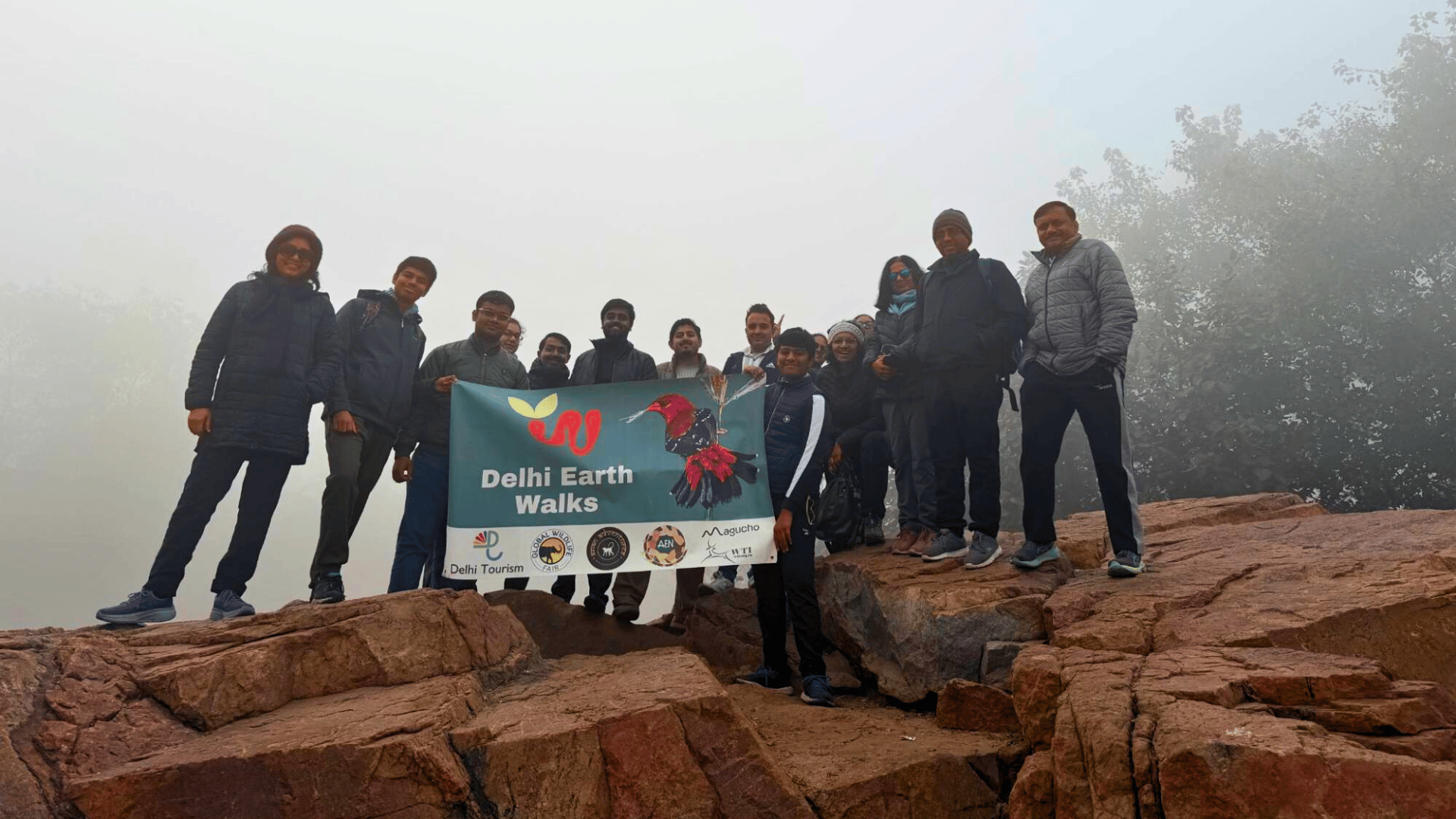
Unearthing Ancient Delhi - An Archaeological Walk Through East of Kailash
Date: 18 Jan 2026
Location: Ashokan Edict, East of Kailash
Walk leaders: Shalaish and Tejveer
Walk Theme: Ashokan Edicts and cupules in the East of Kailash
Walk Coordinator: Salil Dutta
Number of Participants: 9
Name of Participants: Ratnendu Ray, Nimisha Srivastava, Renuka Devvaya, Saloni Sissodia, Devendra Singh, Sandhya, Shruti, Shreya Jai, Arindam Majumdar
History is passed down to the next generation primarily through two forms of evidence: folklore and the physical imprints of this folklore. Both these evidences prevalently exist for the city of Delhi too, and exploring them to understand the importance of this city, Asian Adventures, in collaboration with Global Wildlife Fair and Delhi Tourism, organised an Earth Walk in the East of Kailash area. The region is flooded with places of historical significance and archaeological footprints. The walk began with an enthusiastic group meeting at the designated venue and the walk leaders of the day. Shalaish and Tejveer are talking about the geological composition of the region of Delhi.
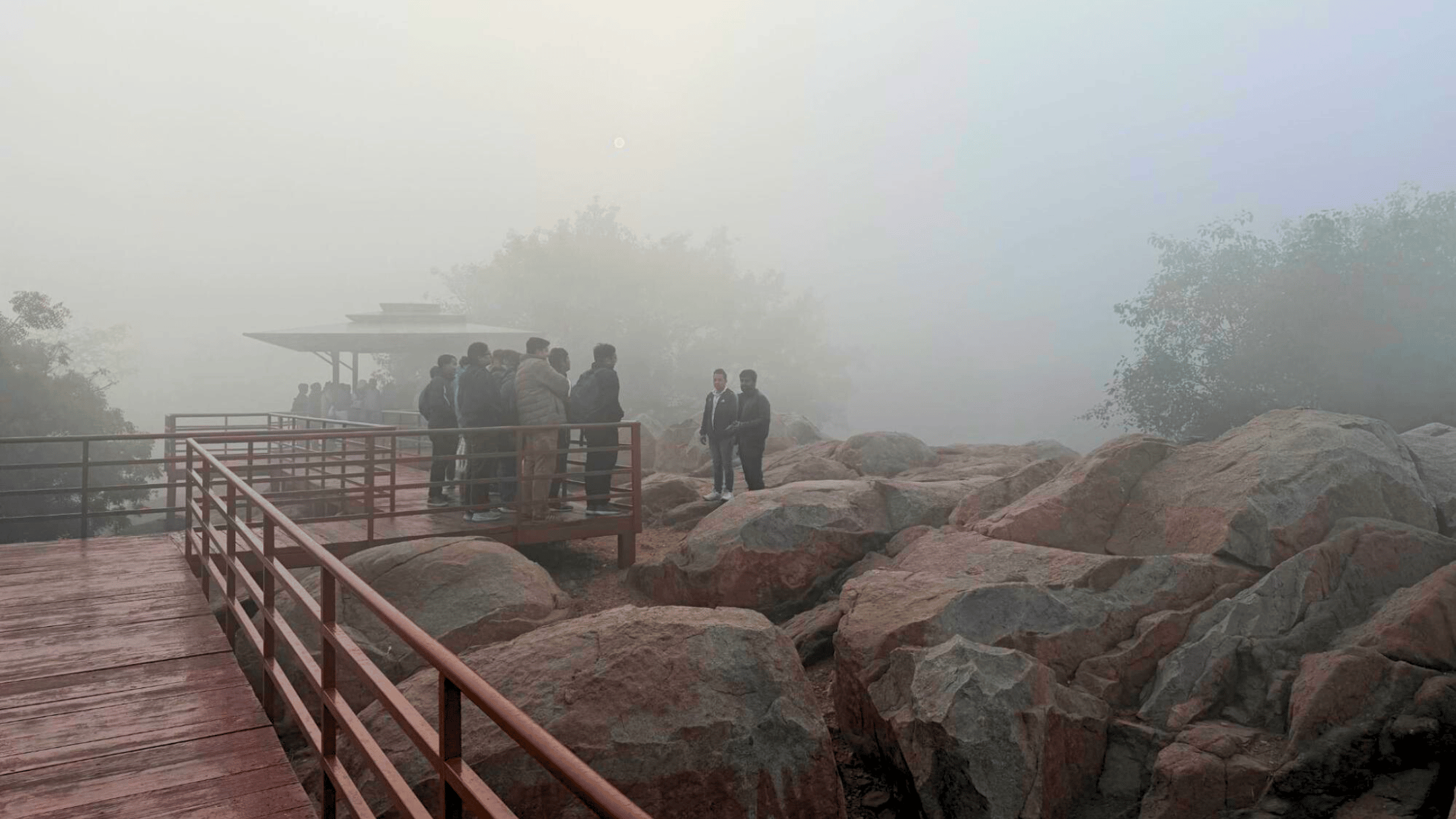
Delhi basically forms a part of the ridges that extend till the Alwar region. These ridges, along with being geographically important, act as water plunges that restore water and drainage into the Yamuna; they also act as natural museums of the past that the area has witnessed. The ridge of Delhi forms an excellent ecosystem in its own and has abundant Aravalli Rock Art in it. The area is of high archaeological importance as remains from different timelines can be found here - from the Palaeolithic age, the evidence of lower, middle, and upper stages of the period can be found here, along with evidence from the Mesolithic age.
The area was inhabited by homo eretus from the Lower Palaeolithic Age, Neanderthals from the Middle Palaeolithic Age and Cro-Magnons from the Upper Palaeolithic Age. The signatures of these can be traced in the rock art still present. These also bear signs of the technology they were using in that era, and also suggest the existence of an ancient river in the area, where key civilisations dwell. The Delhi ridge, hence, becomes the textbook for human evolution. As the group further explores the location, they come across various bedrocks bearing similar archaeological patterns. On being asked about what the patterns represent, three different schools of thought regarding these were discussed. The first one stated this to be an ancient board game known as Mancala, which originated in Africa. This game is considered to be the proto-form of chess. The second school of thought believed it to be a type of ancient calendar that calculated the phases of the moon, and the third believed it to be an instrument corresponding to the menstrual cycle in women. Archaeology, on the contrary, has defied all these beliefs as examination of these patterns has revealed these boards to be in the couple of either 4s or 30s.
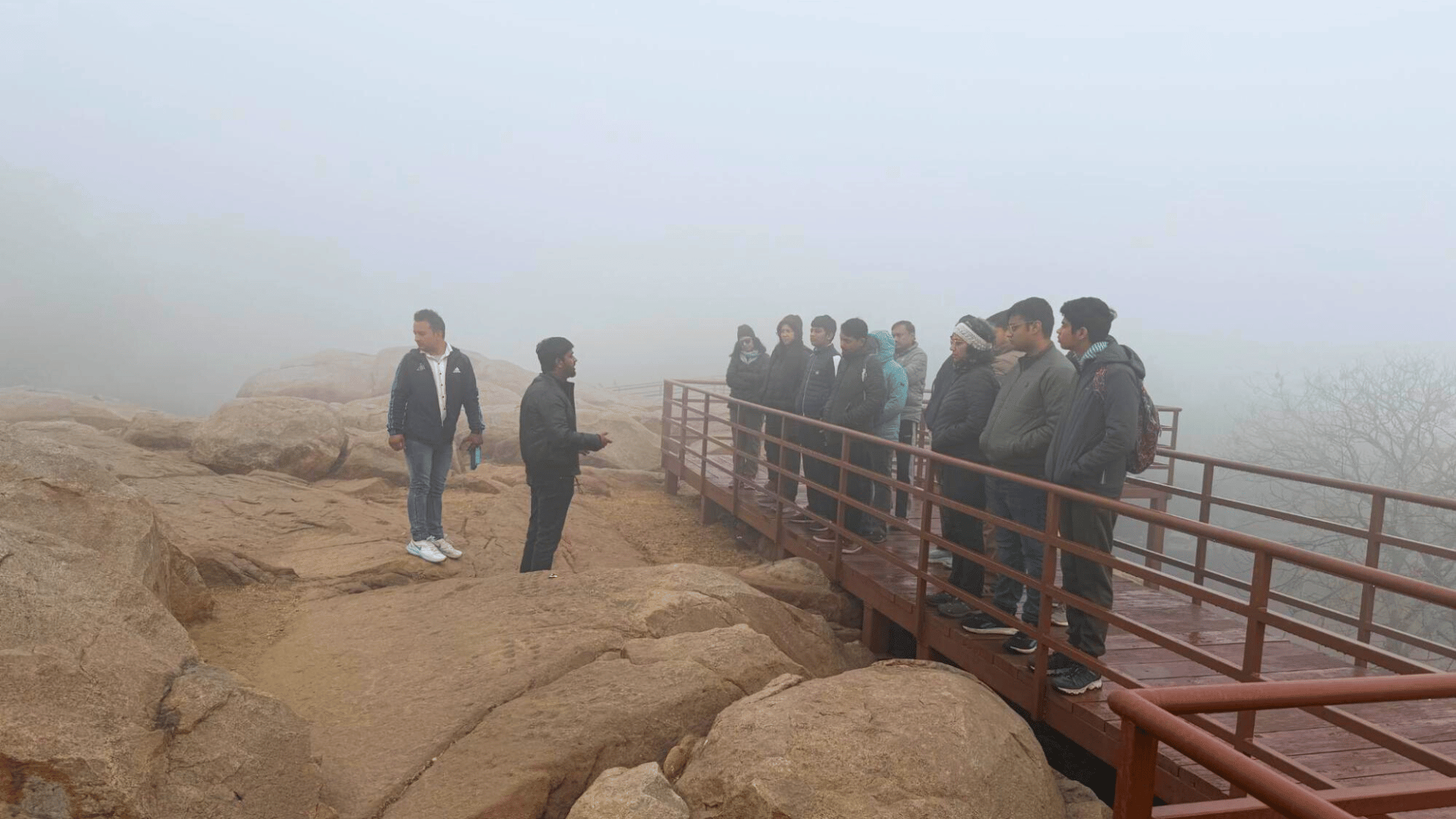
Further on the walk, someone asked about the use of carbon dating devices to find the actual age of these rocks. To this query, they explained that even though a famous newspaper did recently publish an article about the carbon dating of these rocks, in reality, carbon dating is just a popularised term, and these rocks cannot be carbon-dated. An interesting fact was shared here: that the geological evidence that is found in this region actually corresponds with the mythological poetry of texts such as the Mahabharat. This discussion left the people wondering, maybe what is told to us as epics is basically our history, and one can then judge how old these rocks are in reality.
Then, after discussing the intricacies of archaeology and having a fun time picking up random rocks and trying to decipher the kind of depression in them, the group moved towards the highlight of the walk - the Ashokan Edicts. It was explained why this specific edict is of importance. There are two types of edicts - the major Ashokan edicts and the minor Ashokan edicts. The former one is for the larger masses, while the latter one is for relatives or close persons. The minor Ashokan edicts are mainly found in central and southern India, and northern India consists mainly of major Ashokan edicts. A rare one is actually the one in Delhi.
The crowd was curious to know what this personalised inscription talked about.
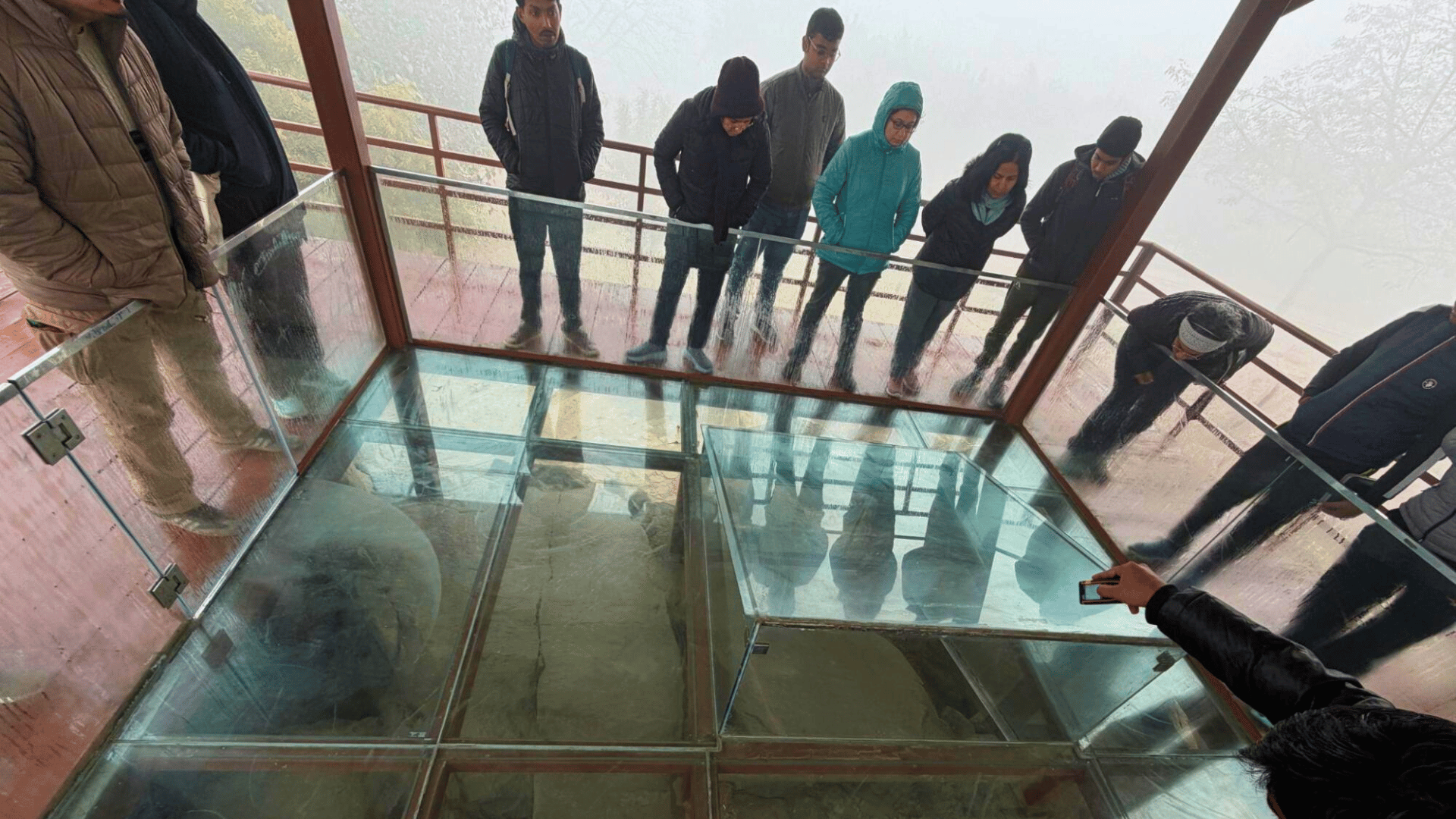
It was said that it was one of the earliest prescriptions of Ashoka that he had sent, probably to his cousin, who was ruling in this region. A turning point in Ashoka's life was the famous war of Kalinga, which caused many deaths and refugees. It further stated that these rock edicts were basically a physical representation of the mental turmoil Ashoka was facing. These symbolised the change in this mindset as well as the philosophy that he wanted to propel thereafter.
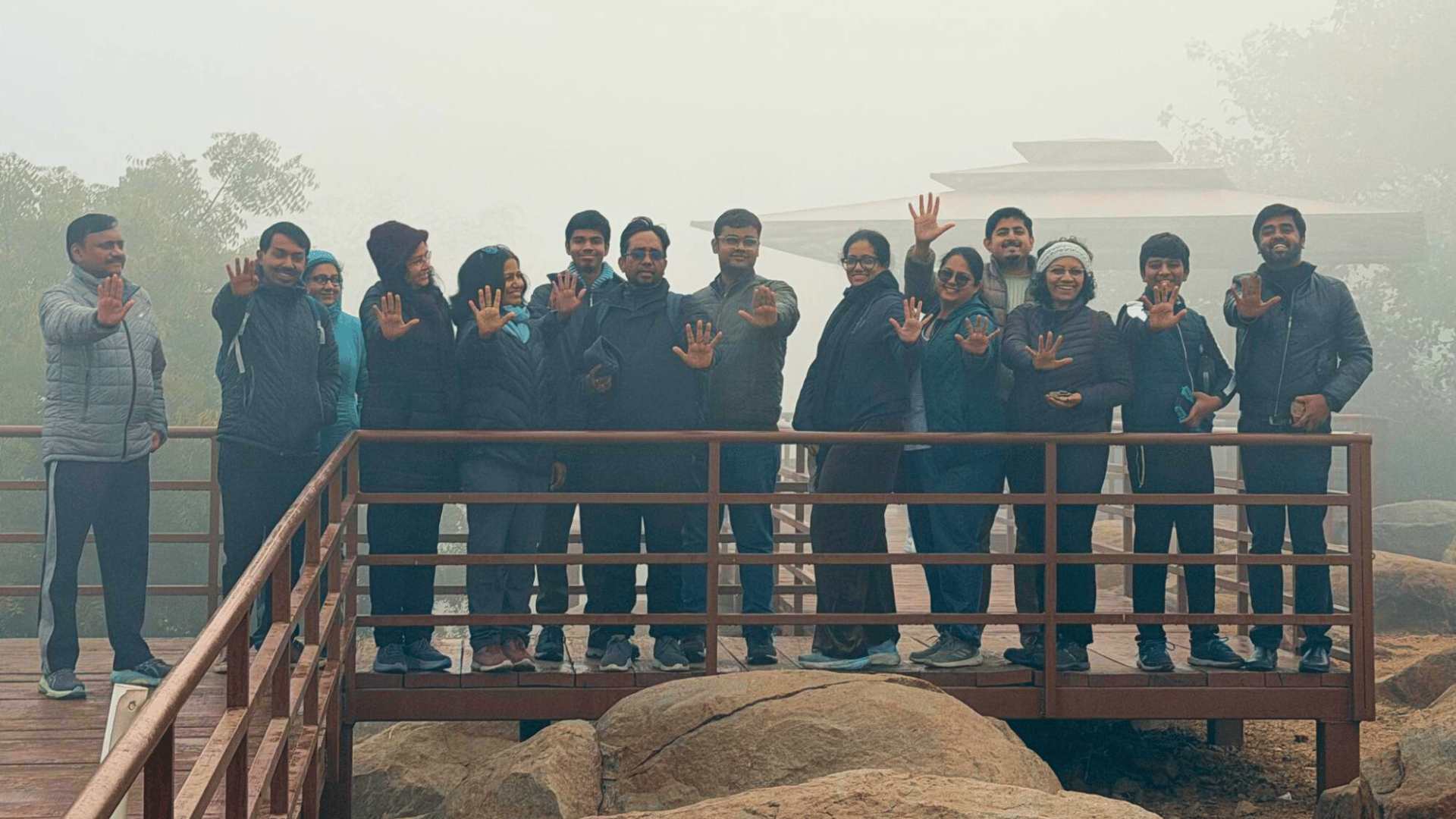
Overall, the walk was a humongous success, where people understood the past of the land they were standing on. Further, it encouraged them more to preserve these places for future generations to witness them and take pride in being part of one of the greatest civilisations on earth. They even felt empowered to join more upcoming walks that would make them aware of such places existing in the heart of Delhi. You can be a part of these interesting and knowledgeable walks and get to know your city in a much better manner. To join us on these weekly ventures, click here https://asianadventures.info/p/af0725/