
Birdwatching in the Heart of Delhi: Sunder Nursery Earth Walk
Date: 21st December 2025
Location: Sunder Nursery
Walk Leader: Mr Prasanna Gautam
Walk Theme: A birdwatching Earth Walk

The evening of 21 December had set the perfect setting for the Earth walk in Sunder Nursery. The enthusiastic participants had met at the entrance gate of the nursery, and the walk began with the walk leader giving a brief insight into the history of the place. However, the old route disappeared when the British came, and the nursery was once a link. In modern times, the existence of places such as Sunder Nagar the connection between the two places via Sunder Nursery, is further lost. Yet the nursery continues to exist with all its beauty, most of which was restored in 2007 after a pact was signed between the Archaeological Survey of India and the Aga Khan Trust. The participants were fortunate enough to spot the Indian peafowl at the very beginning of the walk. Multiple questions were then asked about whether specific trails exist in the nursery or if it is through experience that one has to spot the birds present here. Another prominent question was how to differentiate between peacocks and peafowls, which was answered by the walk leader.
As the trail continued, the next bird to be spotted was the black kite. A very interesting fact was shared here — that the black kite has a subtype known as the Black-eared Kite, and this bird is a winter migrant. In the middle, as the participants were trying to track the sounds of the birds via eBird, they encountered a group of Jungle Babblers, Rose-ringed Parakeets and the purple sunbird. It was said about the Purple Sunbird that it remains black until the sunrays fall on it. The details of the different plumages of birds were then discussed. Participants were amazed to hear that different plumages happen during different seasons. A participant then shared his experience of having seen a purple sunbird, which was completely black during March, but the purple sunbird we spotted had a slight yellowish-green tinge of colour in it. It is during the breeding season that the birds display their most vibrant plumage to attract females. Spring is the breeding one, so male birds would be seen in their best colour. Many other birds, such as waterfowl and wagtails, have multiple plumages through the year.

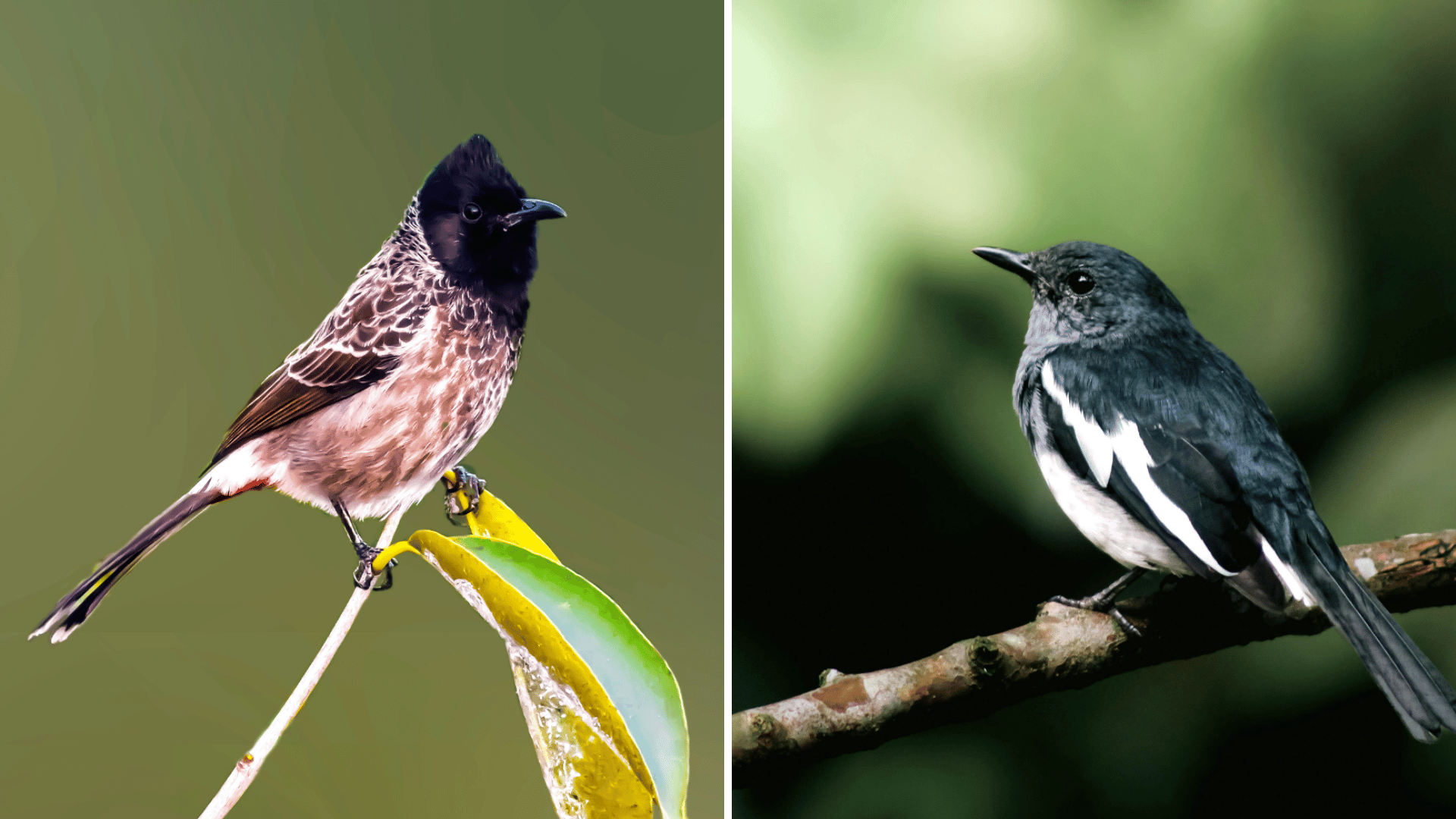
By this time, the team had reached that part of the nursery where the vegetables were being cultivated and saw the seasonal vegetables that were being grown. A highlight of the walk was standing for 15 minutes in a graveyard within the nursery to trace the call of a Hume’s warbler. The call was being heard clearly, but tracing the bird was the proper task. All the participants were trying to hunt the bird with their binoculars and cameras when it was finally spotted sitting in the middle of a mesh of branches. Many of the participants were shocked when a specific detail was shared by him — that Delhi is the second bird-rich capital in the world after Nairobi. The reason is that Delhi lies in the migration zone, so it becomes a stop for summer birds that are heading towards the northern migration. Delhi has a recorded massive checklist of 425 birds. Delhi, hence, becomes the migration funnel and an important site for bird areas. The next beauties to be spotted were the red-vented bulbul and the Oriental magpie-robin. Even though the nursery was pretty crowded during the evening hours, there were still trails that had no trace of humans. The group ventured into these lesser-known places to spot the Rufous Treepie and Lesser Whitethroat.
The Ashy prinia was next on the list to be spotted. They are also known by the name of old world warbler. He then explained that different birds' plumage differs. It is much like the hormonal changes in humans. Further, a very intriguing phenomenon was discussed wherein the relation between human habitation and bird population was explained. Where there are human interactions, the bird population naturally increases because of the accessibility of easy food. Hence, more birds are found in human-inhabited areas than in jungles. The participants were then told to beware of the snakes, as peacocks are a clear sign snakes would be present in the area too. The common moorhen and white-throated kingfisher were then spotted. When a common chiffchaff was spotted, a fact about the hummingbird was shared too. The bird, which hardly weighs 15g, flies all the way from North America to Africa for breeding, covering a distance of over 5000 miles.
Overall, the walk was an immense success, wherein the noisy city surroundings could not stop the avian diversity of the city from being witnessed at Sunder Nursery. The Earth walk stands as proof that a little time spent in understanding the surrounding nature can actually bring positive changes in your life by awakening you towards the marvels of nature that one might overlook in everyday life. You can also be a part of these walks with us. To join, click here https://asianadventures.info/p/af0725/
Bird Species seen during the walk:
- Common Tailorbird
- Rufous Treepie
- Greenish Warbler
- Eurasian Collared-Dove
- Asian Koel
- Indian Gray Hornbill
- Jungle Babbler
- Scaly-breasted Munia
- Alexanderie Parakeet
- Hume’s Warbler
- Black Kite
- House Sparrow
- Common Myna
- Rose-ringed Parakeet
- Indian Peafowl
- Red-vented bulbul
- Oriental Magpie-Robin
- Rufous Treepie
- Lesser Whitethroat
- White-throated Kingfisher
- Ashy Prinia
- Common Moorhen
- Common Chiffchaff
- Black Drongo
- White-breasted Waterhen
- Brown-headed Barbet