
Spot Amazing Birds and Wildlife on Pangot Earth Walks
Date: 4 January 2026
Location: Jungle Lore Birding Lodge
Trail Leader: Jagjeewan S Dhami
Trail Theme: Water sources of the Pangot habitat and birdlife
Trail Coordinator: Kundan Kumar
Number of participants: 3
Name of participants: Charu Sharma, Meenu Salhotra, Dharmendra K Tripathi
The most beautiful aspect of nature is the dependence that every form of nature has on the others. To explore the relationships between the local avian diversity that exists in and around Pangot and the water sources in the region, Asian Adventures, in collaboration with Global Wildlife Fair, organised an Earth Walk. The various water sources in the region have largely affected the ecosystem, so to understand the biosphere of Pangot, it is necessary to delve deeper into the different forms of water sources that exist in the region. The walk began around 8:30 am from the Jungle Lore Birding Lodge.
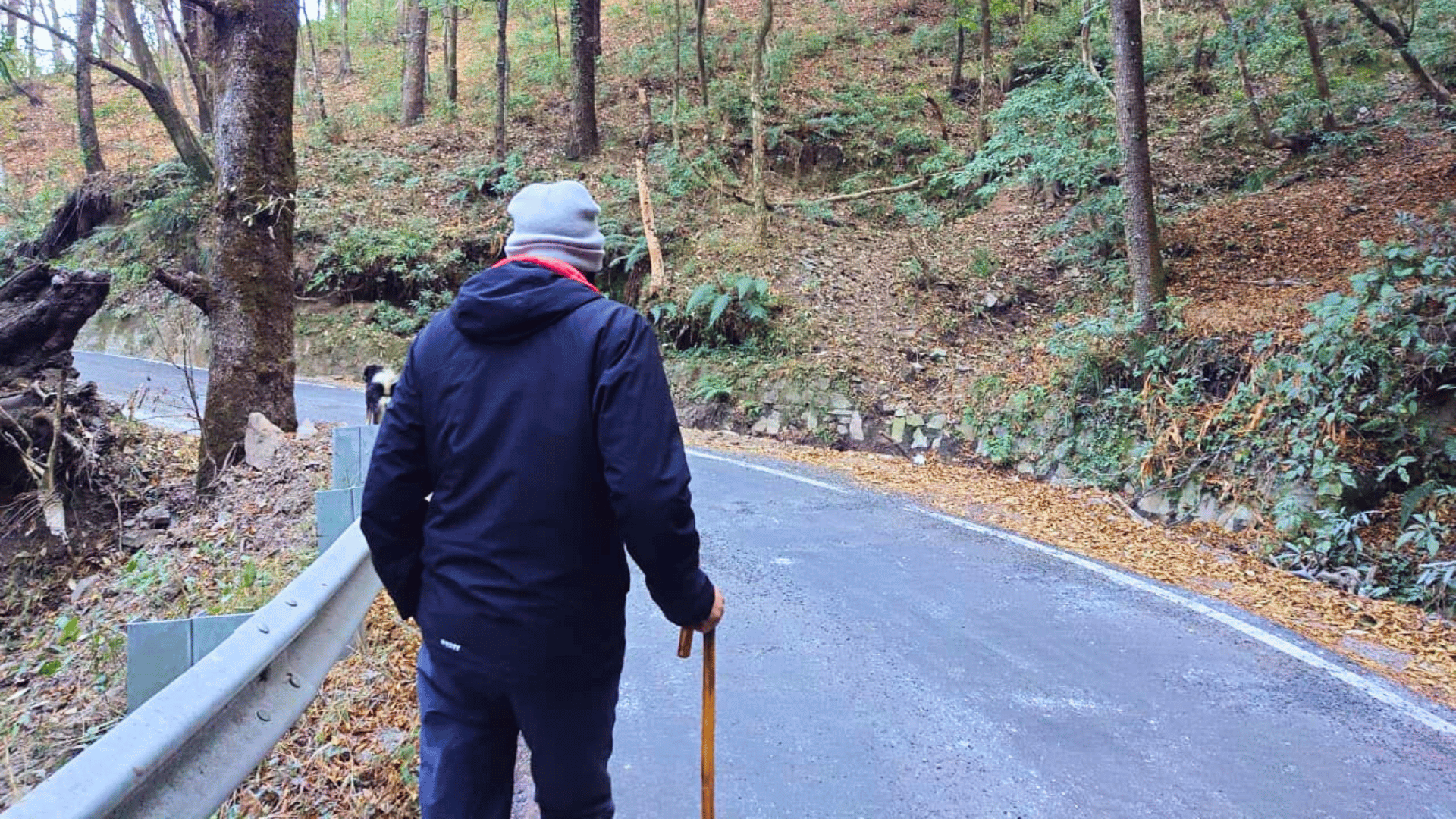
The walk leader gave an introduction of what the group might expect to encounter on this walk. He explained Pangot is well-known for its rich avifaunal culture, and the forests in the region are characterised by broadleaf trees, which are deciduous in nature. One of the crucial reasons for this ecosystem to thrive is the fact that it is supported by perennial and seasonal water sources that support the wildlife and biodiversity that are present. As the walk began, several birds were spotted. In the beginning, a streaked-laughingthrush was seen. As the group proceeded further, he explained the topography of the region - that Pangot lies in the mid-elevation Himalayan zone and the forests of Pangot comprise Oak trees, rhododendron trees and mixed broadleaf forest.

The region receives ample rainfall throughout the year, which acts as a natural support for the nalas and dharas (natural springs), gadheras (seasonal streams), and small pools and seepage zones. It was then that the group encountered a Grey wagtail. These water sources, he further explained, act as lifelines for birds, mammals, insects,s and even for the local communities that live nearby. As the group reached a forest water point, which in this case was a stream, they saw a Eurasian Jay taking a dip in the cool waters. He explained that these minor water sources naturally become spots for the birds to replenish their thirst and take a bath. The next venue to be reached was a small natural spring. The participants were told to be careful while navigating near it, as the area had a lot of moss surrounding the spring. An important observation was shared here by the walk leader — that mosses, algae, and ferns around the stream are, actually, a sign that the ecosystem is healthy and thriving.

As he traced the call of a Rufous Sibia, he continued to explain that wildlife movement gets directly affected by the seasonal variation of water flow. These streams also support the insect population, which acts as an important food source for the amphibians. One of their most important roles can be traced during the dry season, where they act as microhabitats, also influencing the nesting and territorial behaviour.
Overall, the walk was an enormous success as the participants learnt about how the water sources bring about a change in the whole of the Pangot region. This made them naturally enlightened about the need to protect it and let these water streams thrive, creating a rejuvenating take on conservation. You can also join us and unlock the best of your Sunday with Earth Walks. To be a part, click here https://asianadventures.info/p/af0725/