
Botanical Nature Walk at Mehrauli Park: Exploring Delhi's Hidden Tree Heritage
Date: 4 January 2026
Location: Mehrauli Archaeological Park
Walk Leader: Mr Pulkit Sharma
Walk Theme: Hidden Trees of Mehrauli
Walk Coordinator: Salil Dutta, Amruth, Kirtika
Number of participants: 17
Name of participants: Shikhar, Arnav, Prachi, Peya Vohra, Poonam Sharma, Anuj Vohra, Noel Woodward, Mesha M, Roopa Paliwal, Anandi Paliwal, Mohindeep Kaur, Ahtushi Deshpande, Samina, Areti, Manyata Nema, Aditi Chandra, Anupama null
The identity of a person is incomplete without her/him being aware of their past. So can be the case of a city. To trace back the topography and biodiversity that form the current-day Delhi, Asian Adventures, in collaboration with Global Wildlife Fair, organised the Earth Walk in the Mehrauli Archaeological Park to know more about the native trees of Delhi. This walk was headed by Pulkit Sharma. A group of nature enthusiasts met at the parking lot of the park, and after a briefing by Kirtika, the walk started with the walk leader telling about the history of Mehrauli. Delhi is part of the mighty Aravalli hill ranges, and the city still comprises rocks that are as old as the formation of Earth. The topography of Delhi is formed by these rocks and the Yamuna bank. India’s capital city is divided into 4 ridges - the northern ridge, central ridge, south central ridge, and the southern ridge.
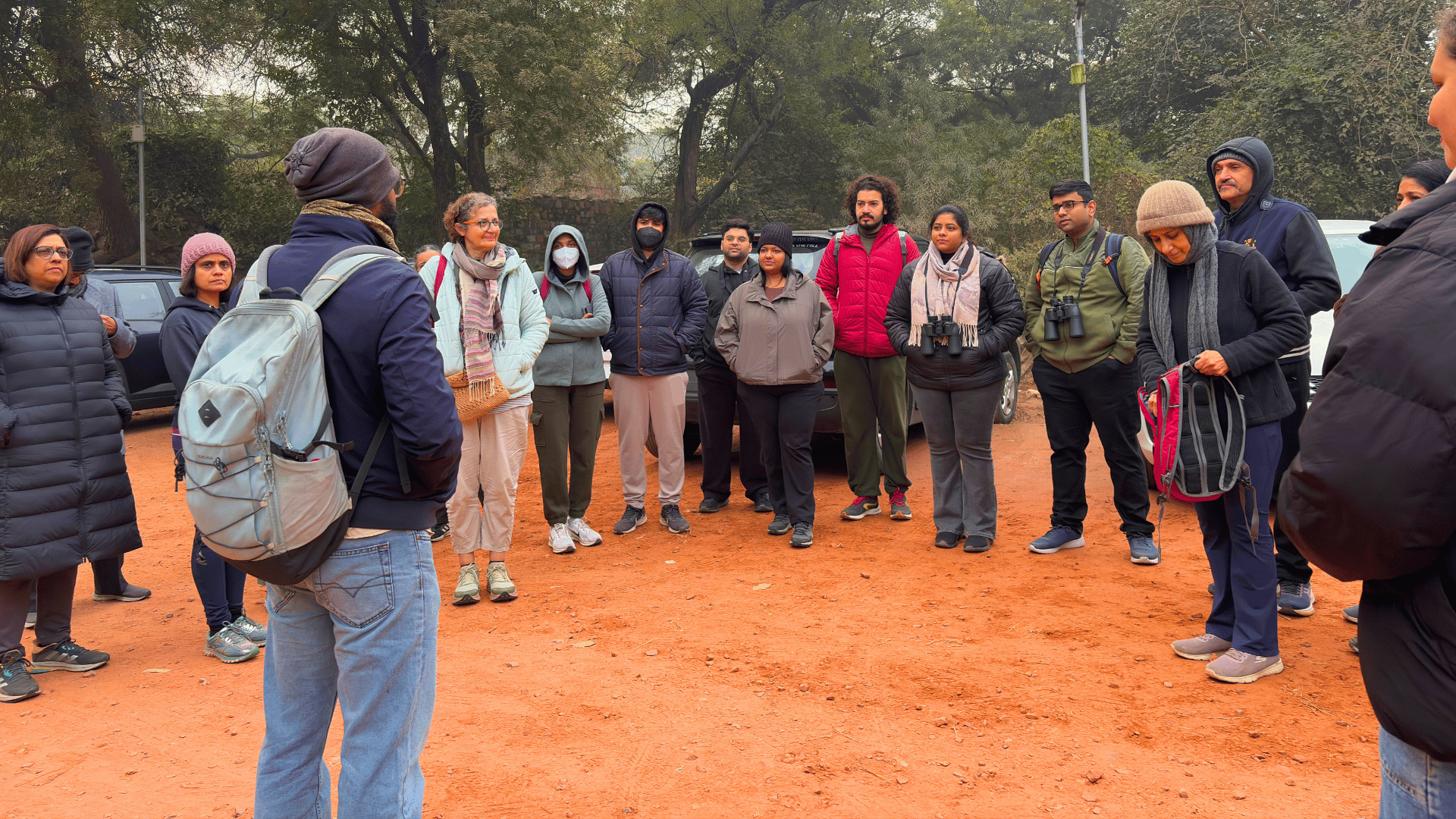
Mentioning the Aravallis as the oldest hill ranges in the world, he further explained that these rocks are metamorphic quartzite. The discussion then shifted towards the history of the city, which had been ruled by several dynasties since 700 AD. From the Mamluk to the Lodis and from the Mughals to the Britishers, every dynasty added something that still lives in the present-day city. A glimpse of how the Aravalli forests would have been in Delhi can still be seen in the Mehrauli Archaeological Park, which still has the essence of the long-gone Aravalli forests in Delhi. The forests are dry in nature and are also known as Monsoon forests. They thrive on the 60cm of rain they receive from July to August. He further explained that Mehrauli is one of the oldest cities in the world.
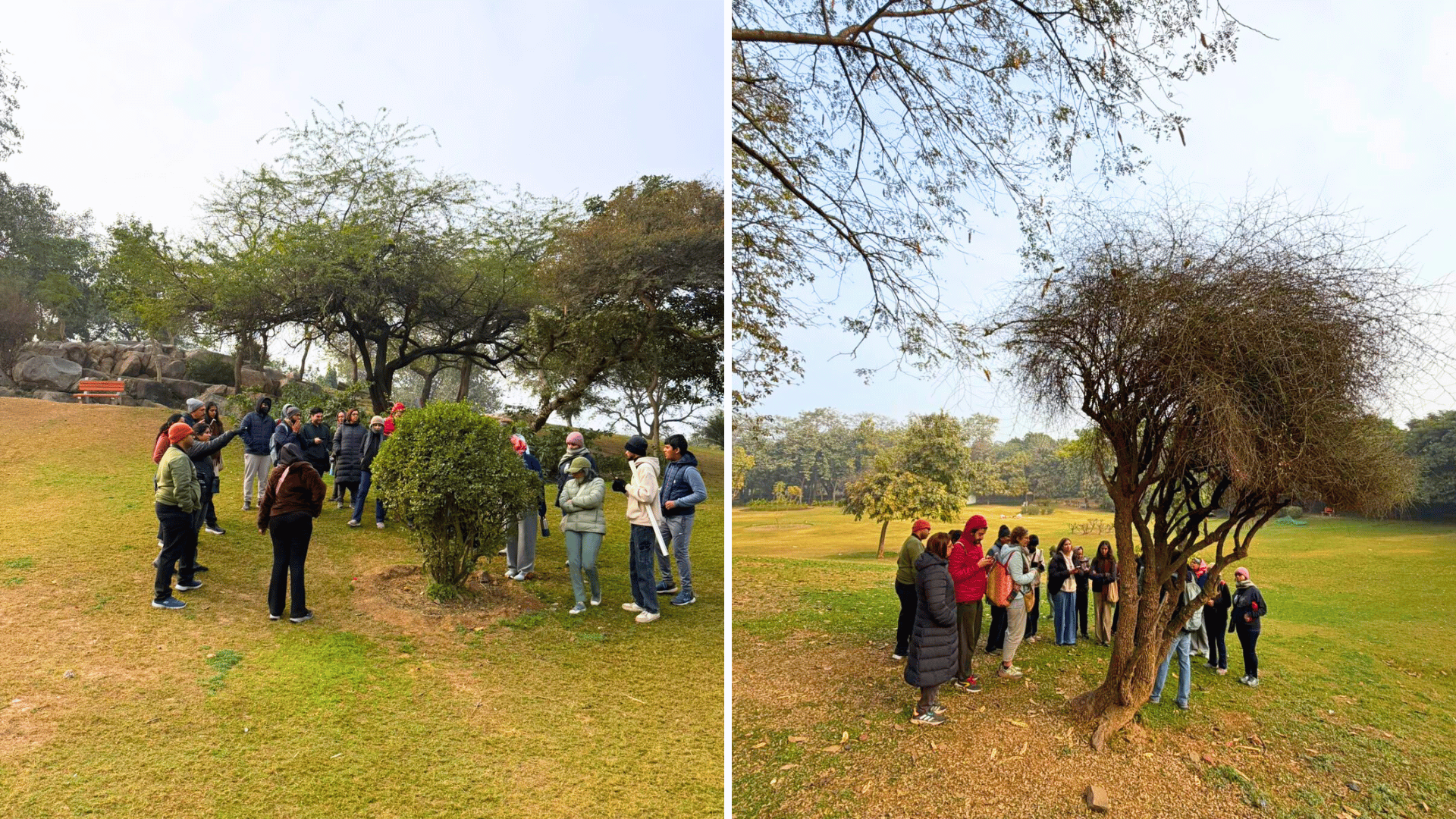
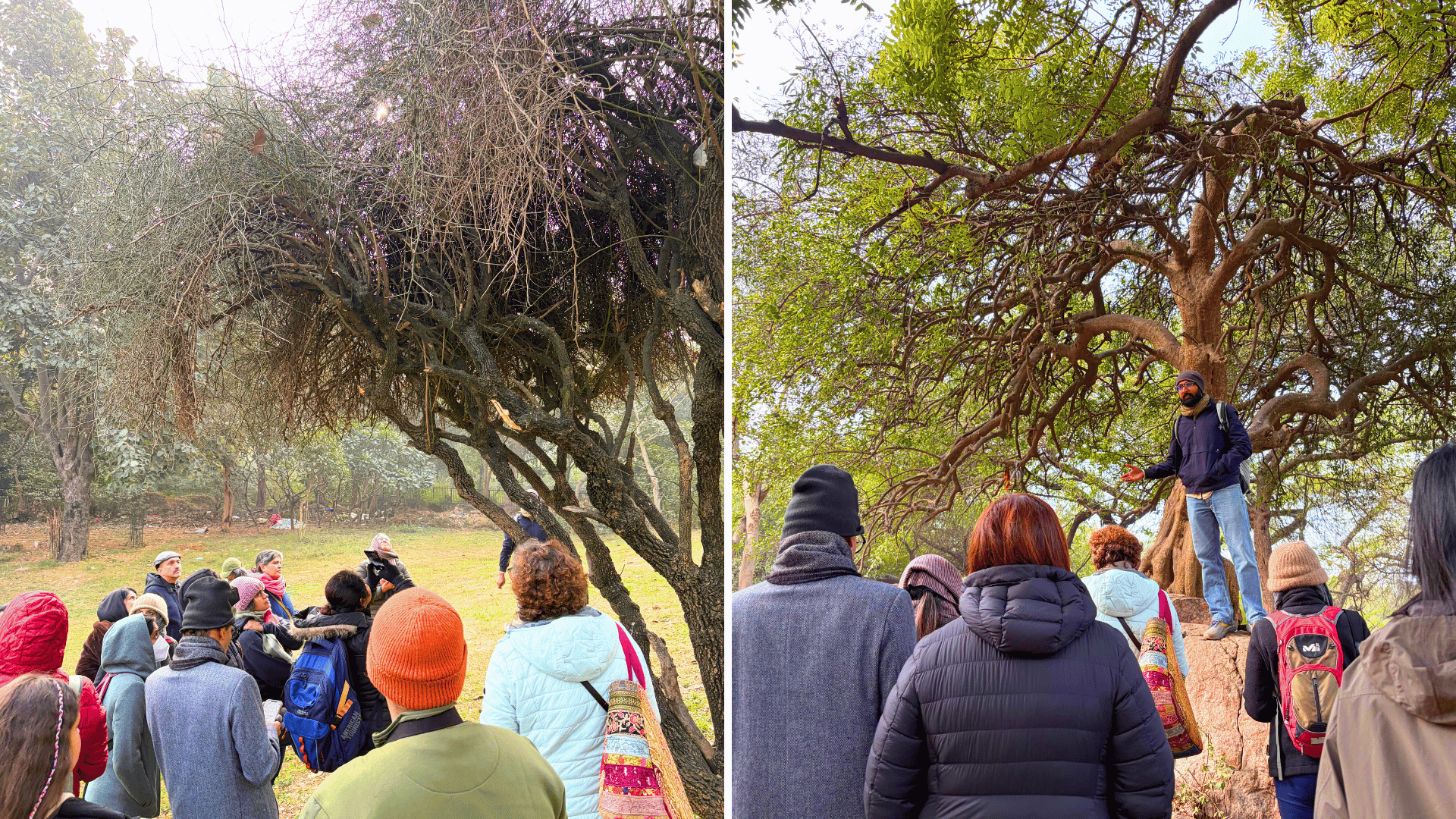
The first tree that was mentioned was present right in the parking lot. Also called the flame of the forest, the Dhak tree is. The tree secretes the Bengal Kino Gum, which is used for confectionery. Its flowers are known as tesu and, in earlier times, were used as the natural colour for Holi. A full-grown Dhak tree attains a height of 20ft. This tree is known for its resilience, as even without leaves, bright red flowers grow on it. One of the major pollinators of this tree is the purple sunbird. Hence, the flower is structured in a way that the bird could easily enter it. The next tree that the group encountered was the Hees tree. Belonging to the Caparus family, it has curved spines, which protect its shrubs from herbivores. This shrub is a favourite of Prinias and babblers for making their nests. It is also the host plant of the pioneer butterfly.
The keekar came next in the way. Its history was quite interesting, dating back to 1911. The Britishers had brought this plant as it resembles the original keekar. The British were practising forest clearing, which created a problem for the local people as their means of fodder and fuel were diminishing. Then, German forester Sir Dietrich Brandis brought this species, commonly known as vilayati keekar among Indias from Mexico. The seeds of this keekar were broadcast in the 1800s because of its fast-growing nature; they soon developed into forests. The royal families of many states, such as Gujarat and Andhra Pradesh, blindly followed this move by the British government, even after the elders warned them against it. By the 1960s, these trees had completely degraded the ecology of the region, as no other trees grew except for these. In Delhi, they are protected under the Delhi Tree Reservation Centre, but in states like Rajasthan, they are being cleared.
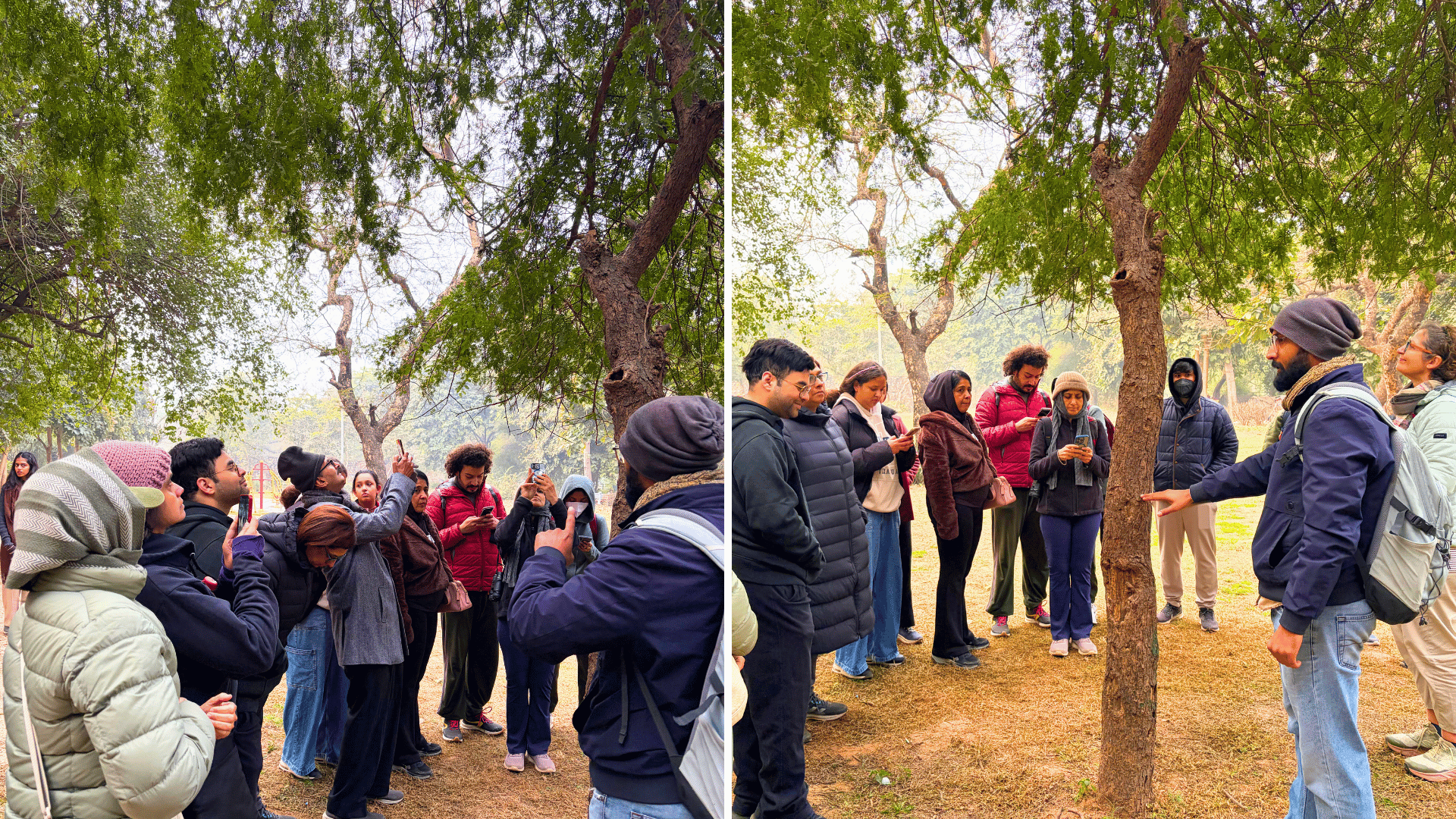
As the group proceeded further, crossing the Tomb of Balban and entering the complex of the Jamali Kamali tomb, a protected chamror tree became the next highlight for discussion. He said that these trees are a common feature in the Aravallis and the Vindhyas. They are known by the name Datranga in the Madhya Pradesh region because of their ability to stain one’s teeth red. The speciality of it lies even in the moths being its pollinators, as its flowers even bloom during the night. The favourite of birds, such as the bulbuls, the babblers, the prinia and the mynas, are its orange berries. He further shed light on the fact that the current focus of the horticulture department is on the native trees. Karanj was the next tree to be seen. This tree is native to the coastal region of India.
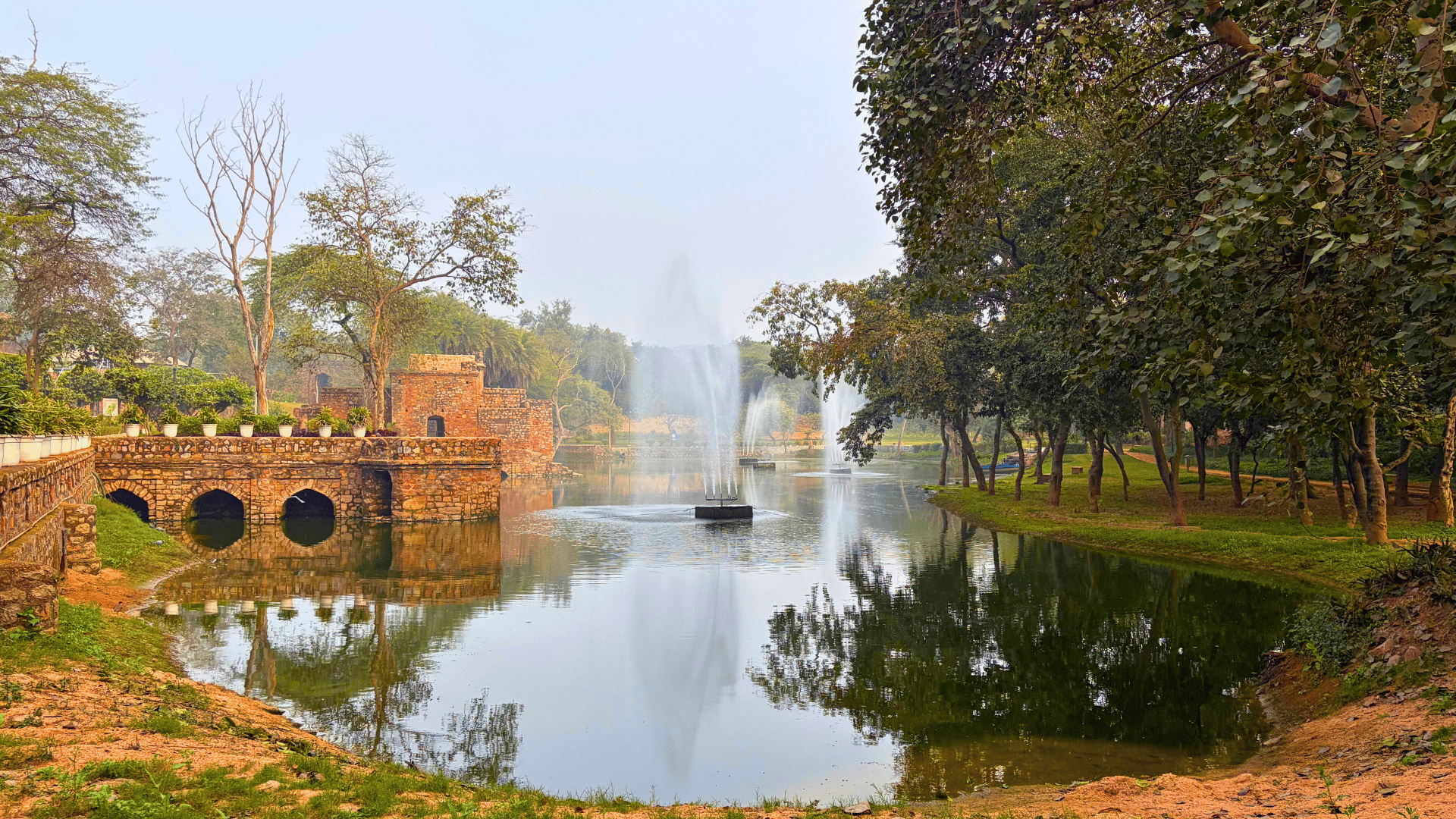
It ideally grows in the saline soil, and its leaves are not grazed by any cattle, hence it has become a monoculture of the forest department. One participant here enquired about the white spots on its leaves. He explained that these were an insect laying eggs on it, and since it is laid between the leaves, the larvae are protected by the leaves. Right next to it was the marod phali tree, which resembles teak and attracts a lot of birds. Kassod was next to be found, which is a host tree for the emigrant butterfly and a common feature in the Western Ghats. As the group proceeded further into the park, they encountered another tree with a very vibrant history. The Khejri was a lifesaver during the Rajputana famine of 1860. The people used the bark of this very tree back then to make chapattis.
This slow-growing tree of Delhi is actually a link between the scrub region of the capital and the semi-arid region of Rajasthan. The first Chipko movement protected the Khejri. Led by Amrita Devi Bishnoi, in the 1730s to save this sacred tree for the Bishnoi community. This tree emerges as another symbol of resilience, as the change of seasons does not affect this plant. Its dry pods are used in the Ker Sangri recipe. The Ronjh tree, which is a member of the acacia family, was next on the list to be seen. It is rare native to Delhi and does not allow any other trees to grow around it. It increases the fertility of the land since its legumes in its roots capture the nitrogen in the air and convert it to nitrates. None had imagined that the back stories of the trees could be so interesting. As he shed light on the native Babul, people learnt it is originally a native of the Nile.
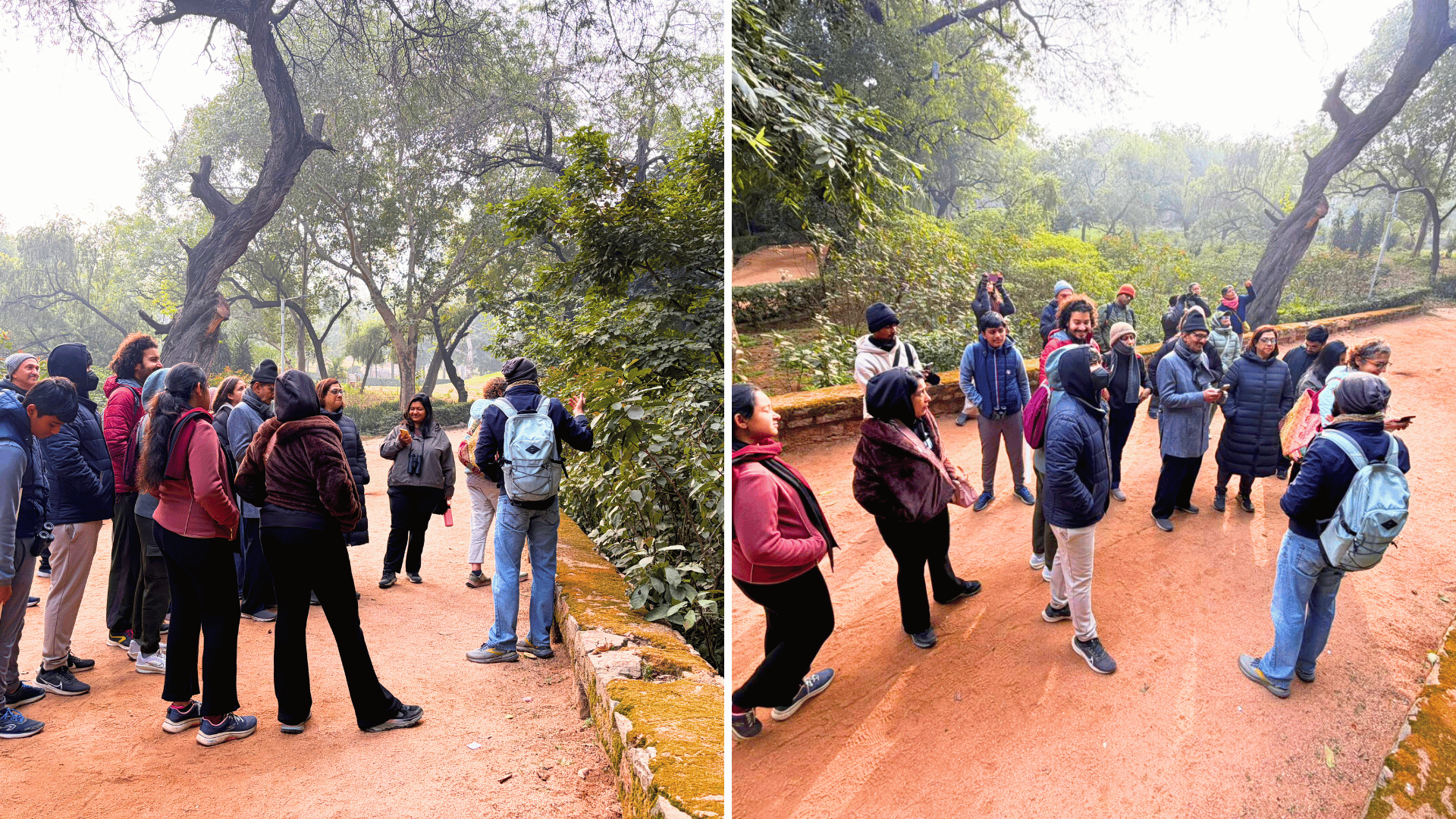
Participants here asked about the difference between vilayati babul and desi babul, to which he duly replied that the former is umbrella-shaped, while the latter is round-shaped in the arrangement of leaves. The tree was approximately 150 years old, and it was said that it was the preferred wood for people’s bullock axles back in time. One more difference between the two types was that the desi babul’s flowers are elongated and brushy, while those of vilayati babul are yellow and smooth. The fruit is the desi babul is round and has a fruit engraved on it. It secretes an edible gum, which is extracted from this tree. The group next encountered a Gular tree from the Phycus family, which was approximately 50 years old. Its unique feature is that it fruits from the bark, and its fruiting concentrations make it a part of the fig family. One can’t see its flowers. The male and the female flowers grow in clusters, and without a wasp pollinating them, the tree would not exist.
An amazing phenomenon was then noticed where a Pilu tree had grown between a rock. The seed might have fallen in between the cracks and grown, pushing the rocks away, a native feature of the Aravalli trees. Pilu itself is a salt logging plant. Best grown in saline soil, it is commonly seen in the Arab culture and has a high importance in Islam as people brush their teeth with its twigs before offering namaz. It is also the host plant of the Salman Arab butterfly.
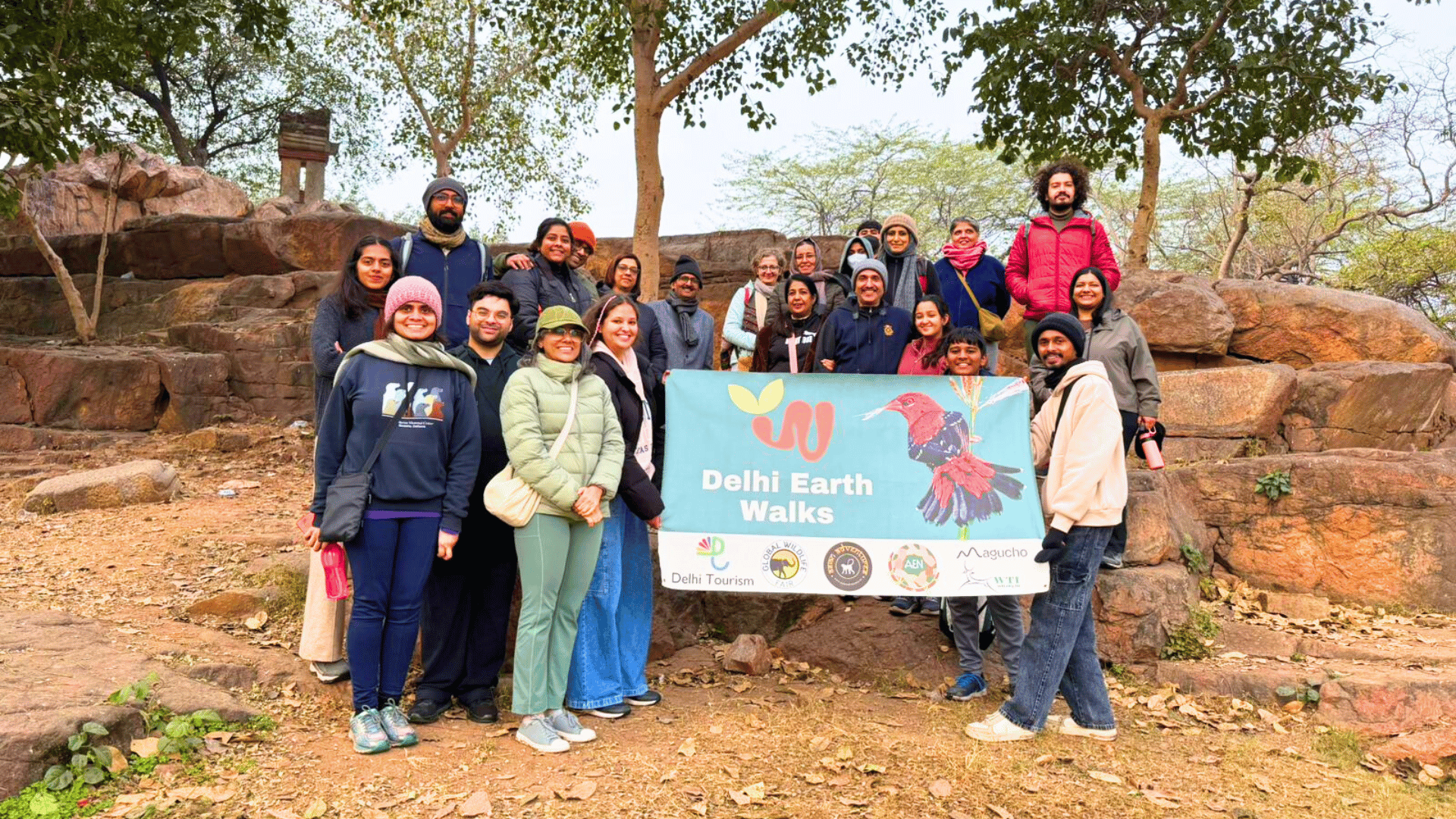
As the group encountered Ber, they already knew it was an important plant because of the presence of Ber Sarai. These grow in monoculture patches, and their kind of vegetation is shrubby in nature. It is also known by the name Indian Jujube. The last tree to be seen on the walk was rather a shrub. The group was amazed to see a hees shrub growing inside an Ernie shrub. Information was then shared about Ernie that which is a native shrub, and it remains leafless the entire year. The branches are green, and that's where its food is generated. It also belongs to the caparous family and is also the host plant for the pioneer butterfly. It flowers towards the end of spring and has red and white coloured flowers. The flowering happens in groups, and people can see the new twigs growing on it. He then said it is very rare to see the leaves of this tree.
The informative walk ended on a high note. It was an essential step towards making the people aware of how the Aravalli forest in Delhi would have looked. It also acts as a wake-up call; we need to protect the surrounding environment. Getting awareness of the surrounding biodiversity is the first important step towards its conservation. To become a part of this collective effort towards our environment, click here https://asianadventures.info/p/af0725/