
Birdwatching Walk and Book Reading Event in Delhi NCR
Date: 11 Jan 2026
Location: Nehar Sahibi Farm
Walk Leader: Ms Anita Mani
Walk Theme: Bird Walk and Book Reading
Walk Coordinator: Salil Dutta, Amruth, Kirtika
Number of Participants: 14
Name of Participants: Abhinav Dugar, Sonam, Daksh, Dhriti, P Roja Rao, Ritika, Ashok, Shweta, Naya, Paloma Ganguly, Tanmay Telang, Anurag Sharma, Deepak Singla, Tavishi
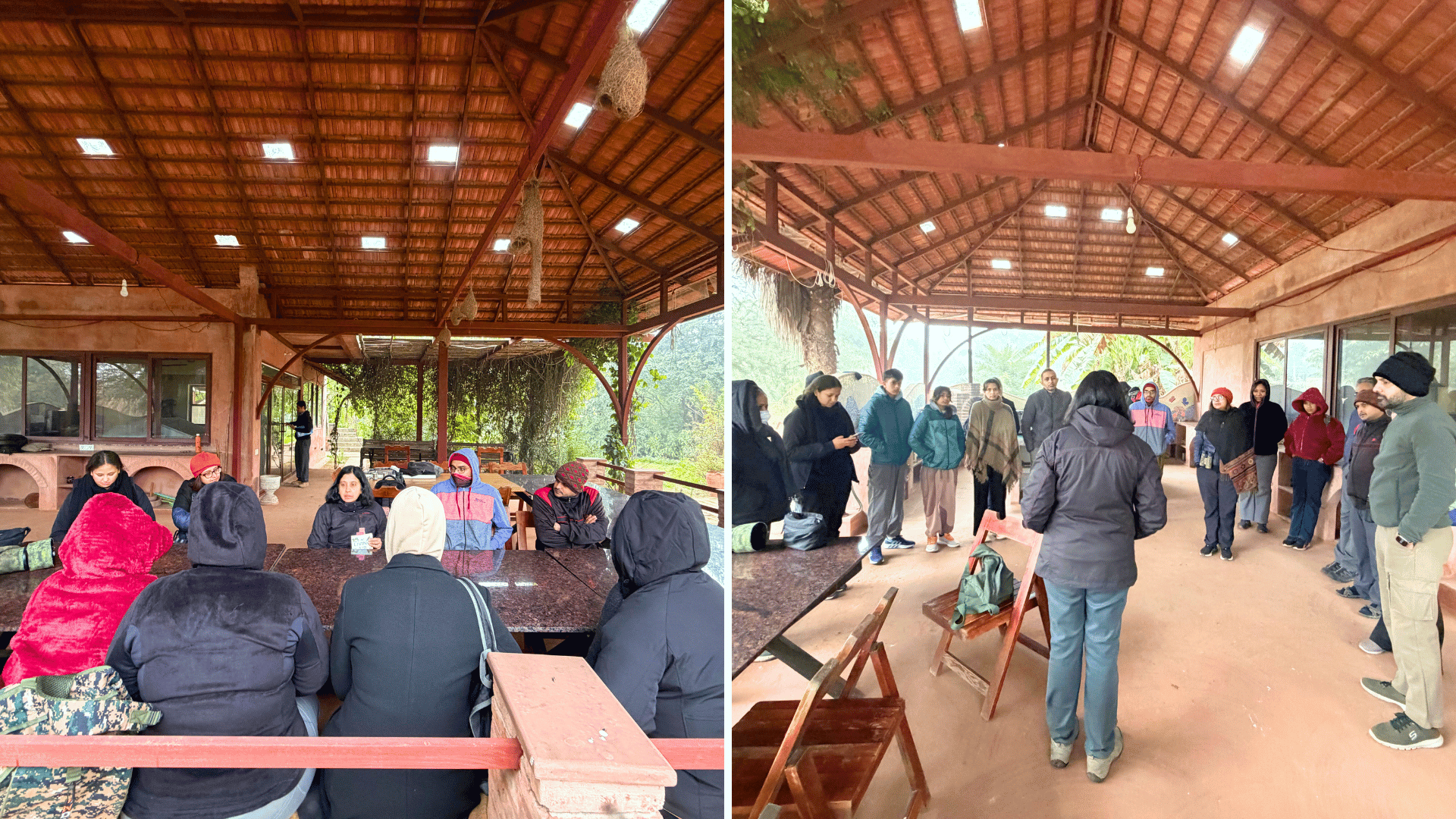
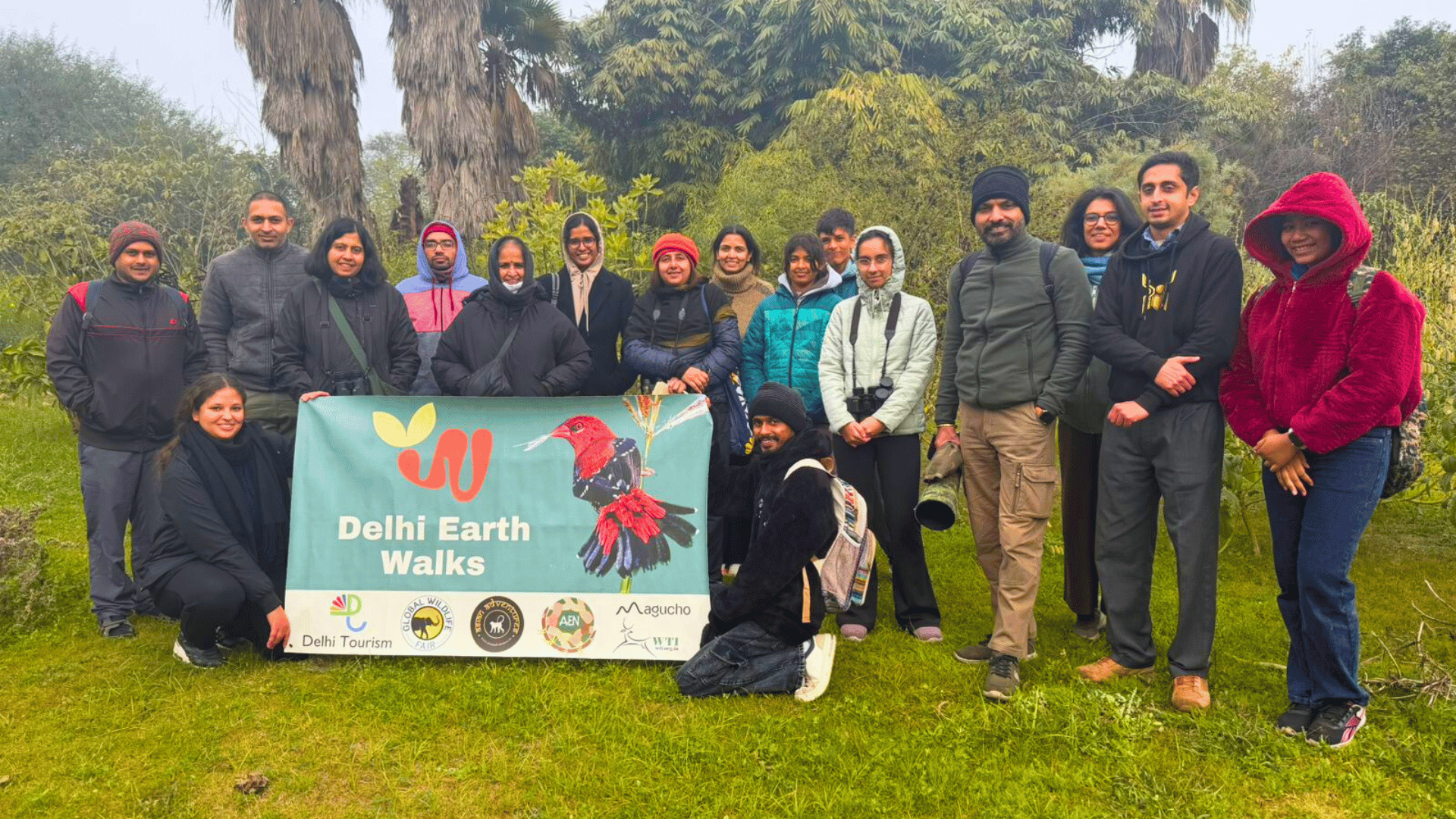
With the temperature dropping to almost 6 degrees Celsius, this specific Earth Walk, organised by Asian Adventures, Global Wildlife Fair and Delhi Tourism, was nothing less than braving the cold and spotting the birds. Yet after figuring out the way through the immense fog, the participants reached the Nehar Sahibi Farm by 9:00 am. After a briefing provided by Kirtika, Anita Mani began with her introduction. She told about how her son was an inspiration in introducing her to the world of birding. She further delved into how her style of birding or organising bird walks is actually an unconventional take on birding. For her, birdwalks mean a quieter way of birding, not a competitive race where the only aim is to trace a new species or to keep a count of how many species are spotted.
She defines birding as a medium to lose yourself in the landscape and to understand the relationship that leads to the creation of a space where some birds thrive, and others do not. She is also the founder of Indian Pitta, a book imprint specially designed for bird lovers. Some of the notable works published by the imprint include The Living Air and The Search for India’s Rarest Birds. Settled on the Nehar Sahibi Farm, the participants sipped the piping hot tea and bread pakoras while she chose some paragraphs from Aasheesh Pittie’s book The Living Air to read out to the audience and introduce them to the world of birdwatching. The paragraphs that were chosen belonged to the chapters “Beacons of Brilliance” and “My Kind of Birding”. These passages were devoid of fancy words and had a focus on the power of observation.
As these passages explained birding, people started sharing their experiences of how observing minor changes around you can bring about a difference. The COVID times were being discussed regarding how the reduction of humans on the road led to an increase in birds in the surrounding areas. The discussion then changed to the planting of native and brightly colored trees to attract birds.

It was then that the caretakers of the farm brought out a controlled setup where caterpillars were being brought up in specific conditions to save them from the predators outside. These were kept on the Arka leaves, which are the native plant for tiger butterflies. These butterflies, when fully grown, would be left in the butterfly garden on the farm. 35 species of butterflies are present on the farm, which cannot be found outside it. The team then gathered to explore the Nehar Sahibi Farm. The group first visited the Bird Forest, where all the planted trees and shrubs were nesting-friendly. Vajradanti and Vitex negundo were one species found in the forest; the former’s white and yellow flowers attract birds. A Hume’s Warbler was heard humming in the background. The native shrub of Gangeti was also seen during the walk.

After spotting a rose-ring parakeet, the group saw the water management system within the farm, which is maintained by cemented ponds. The trees of Jhau and Farash added to the beauty of the farm. A red colour structure was then spotted, which was a bird hide. With a water body attached outside, one could see the birds drinking water or bathing in it from inside. Foods such as sunflower seeds, Bajra and boiled rice are kept for the birds to feed on. Birds like common munias and red-wattled lapwings can commonly be spotted through the hide. Species such as the Indian Cobra and the branded krait can also be spotted on the farm, which was earlier a marriage farm.
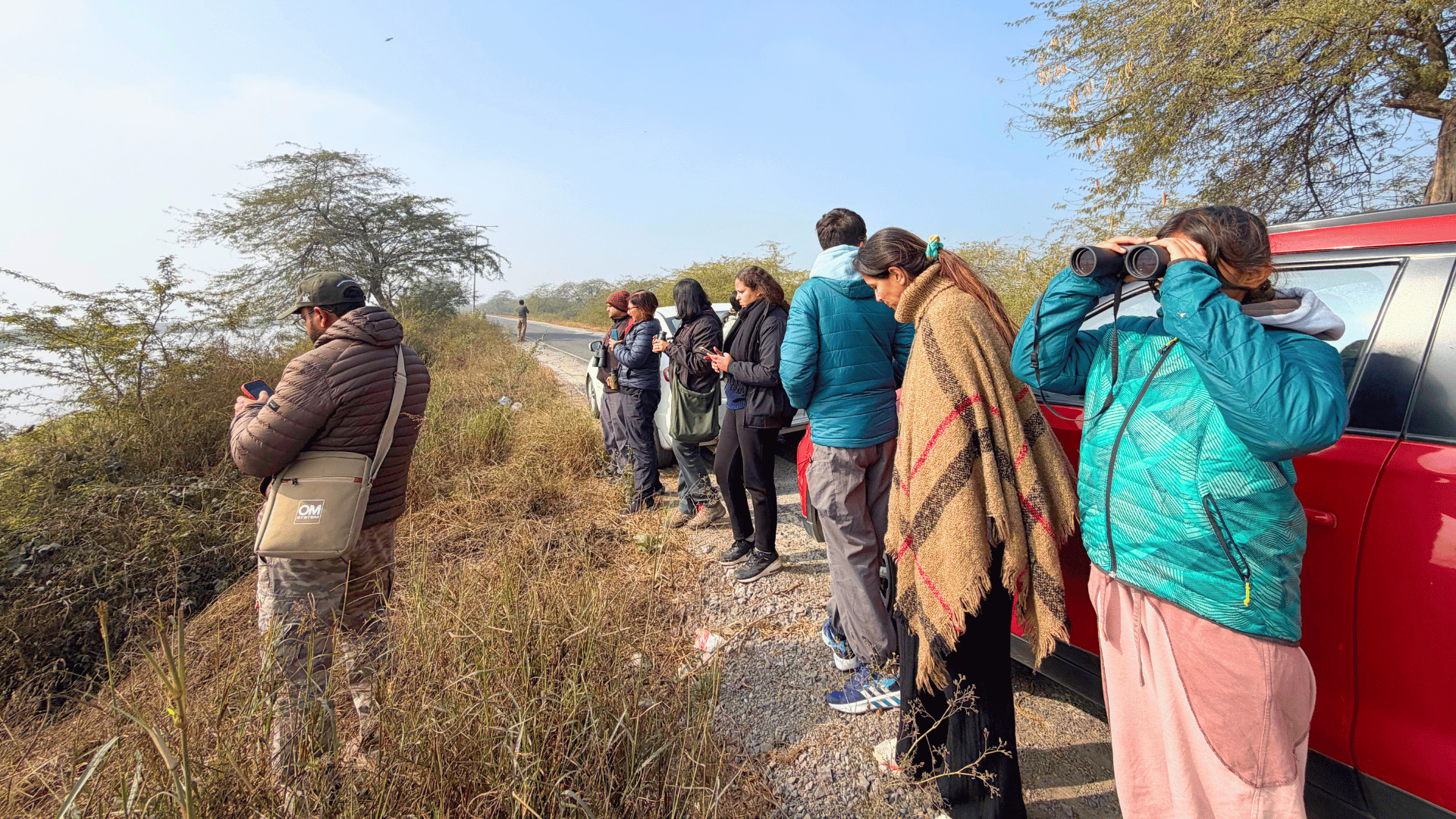
Then the group proceeded to the butterfly garden, where most plants were host plants or plants that attract butterflies for pollination. There was also a natural pond where water species grew. A patch of amrood trees was seen where the fruits were being eaten by birds. It was said that September is celebrated as the butterfly month. The group then left for Najafgarh to search for the birds. A spot where birds like common pintail and Indian spot-billed duck were seen was where the team stopped. The reason for the accumulation of a variety of birds in the region was due to it being a food-rich area. Continuing further on the track, the group saw the highlight of the walk, which was a male Marsh Harrier being attacked by a Black kite. Female Marsh Harriers can easily be spotted, but the male ones are uncommon and have more stunning features. Overall, the walk was an immense success, with the participants being satisfied with the calming book reading session followed by the trail to spot the birds of Najafgarh. You can also turn your normal Sunday into an extraordinary Sunday by tracing birds and gaining a new perspective about your surroundings. To join us, click here https://asianadventures.info/p/af0725/
Bird List
- Lesser Whistling-Duck
- Bar-headed Goose
- Graylag Goose
- Knob-billed Duck
- Ruddy Shelduck
- Northern Shoveler
- Gadwall
- Eurasian Wigeon
- Indian Spot-billed Duck
- Northern Pintail
- Green-winged Teal
- Common Pochard
- Ferruginous Duck
- Tufted Duck
- Indian Peafowl
- Gray Francolin
- Rock Pigeon
- Eurasian Collared-Dove
- Spotted Dove
- Laughing Dove
- Yellow-footed Green-Pigeon
- Greater Coucal
- Asian Koel
- Little Swift
- Eurasian Moorhen
- Eurasian Coot
- Gray-headed Swamphen
- White-breasted Waterhen
- Black-winged Stilt
- Gray-headed Lapwing
- Red-wattled Lapwing
- White-tailed Lapwing
- Pheasant-tailed Jacana
- Bronze-winged Jacana
- Common Sandpiper
- Marsh Sandpiper
- Wood Sandpiper
- Temminck’s Stint
- Little Stint
- Little Grebe
- Painted Stork
- Oriental Darter
- Little Cormorant
- Great Cormorant
- Indian Cormorant
- Glossy Ibis
- Black-headed Ibis
- Red-naped Ibis
- Eurasian Spoonbill
- Black-crowned Night Heron
- Little Egret
- Indian Pond-Heron
- Great Egret
- Medium Egret
- Gray Heron
- Purple Heron
- Shikra
- Western Marsh Harrier
- Black Kite
- Common Hoopoe
- Indian Gray Hornbill
- Asian Green bee-eater
- White-throated Kingfisher
- Coppersmith Barbet
- Brown-headed Barbet
- Alexandrine Parakeet
- Rose-ringed Parakeet
- Black Drongo
- Long-tailed Shrike
- Rufous Treepie
- House Crow
- Large-billed Crow
- Common Tailorbird
- Ashy Prinia
- Plain Prinia
- Barn Swallow
- Wire-tailed Swallow
- Red-whiskered Bulbul
- Red-vented Bulbul
- Common Chiffchaff
- Indian white-eye
- Jungle Babbler
- Indian Pied starling
- Common Myna
- Bank Myna
- Indian Robin
- Oriental Magpie-Robin
- Bluethroat
- Red-breasted Flycatcher
- Siberian Stonechat
- Pied Bushchat
- Purple sunbird
- Indian Silverbill
- Scaly-breasted Munia
- House Sparrow
- Western Yellow wagtail
- Citrine Wagtail
- Paddyfield Pipit