
Spotting 40 Bird Species, 4 Butterflies, and 6 Native Trees on Delhi Earth Walks in Tilpath
Highlighting Tilpath as an important urban biodiversity gem - A report of the Delhi Earth Walk organised in Tilpath Valley Biodiversity Park
Date: 10 May 2026
Location: Tilpath Valley Biodiversity Park
Walk Theme: Birds & Beyond | Mapping Tilpath with Delhi Atlas
Walk Leader: Kaushani Bannerjee
Walk Coordinator: Salil Dutta
No of participants: 52
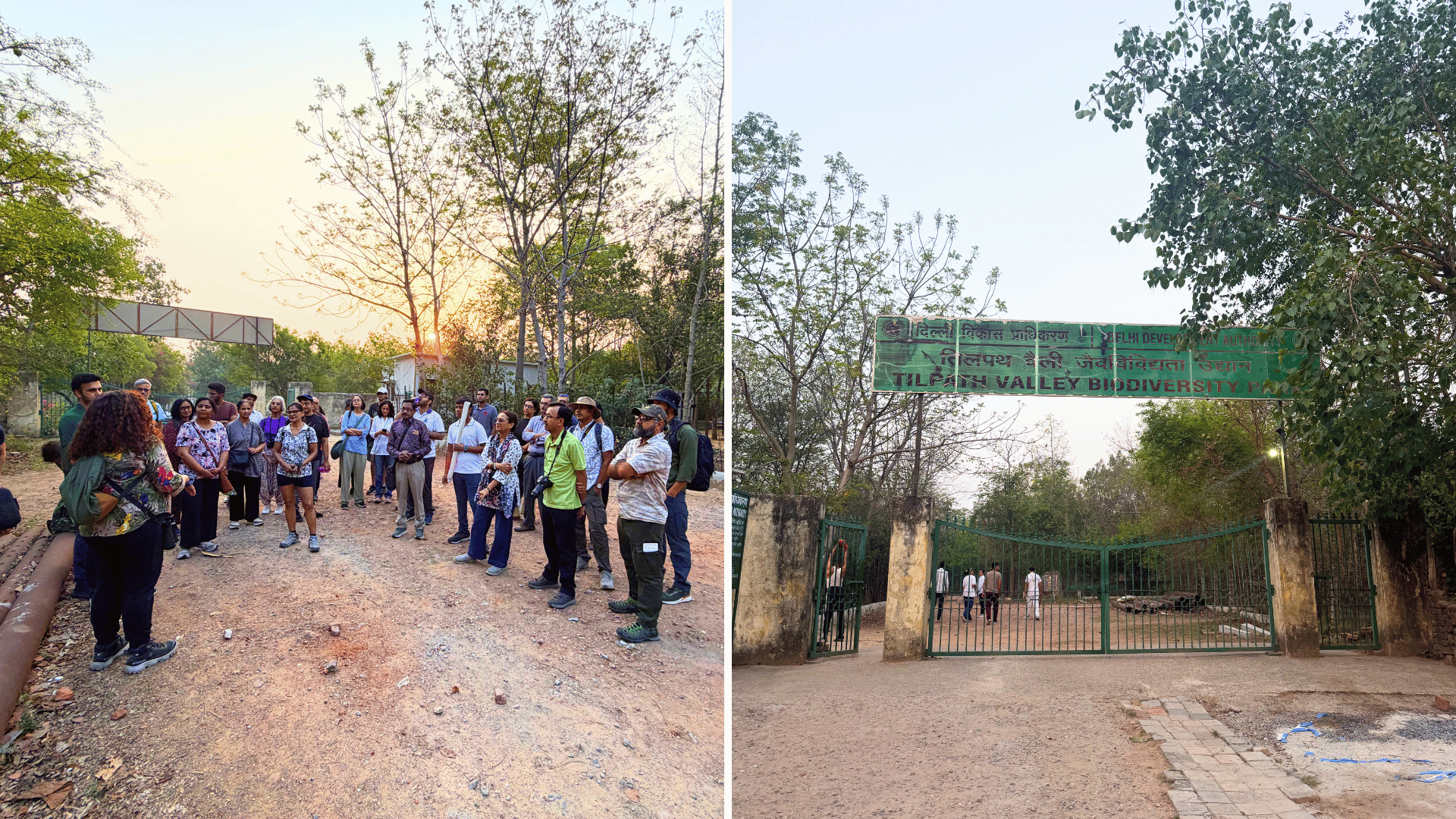
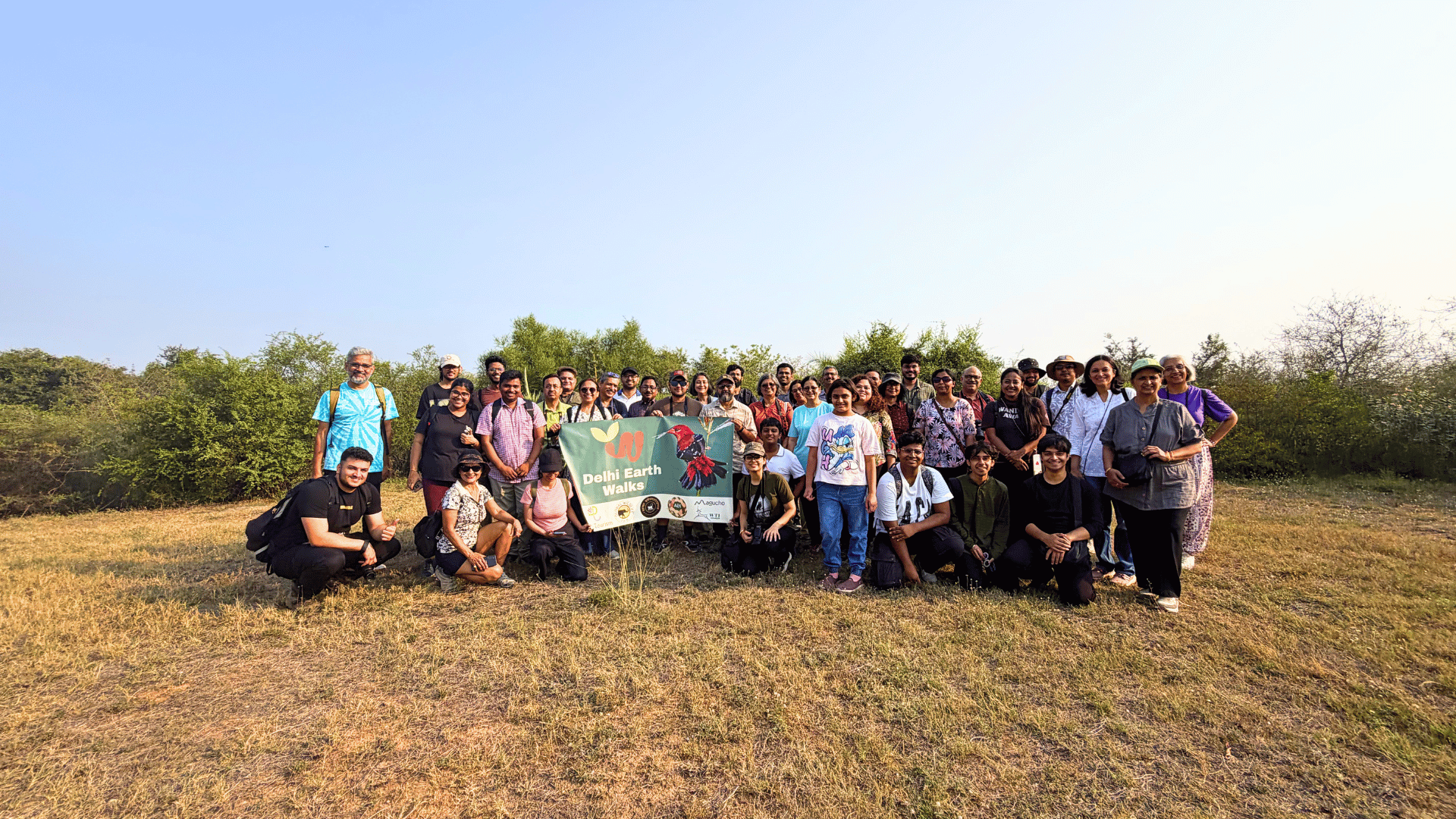
When Earth Walks was started 2 years ago, one of the decided objectives during its establishment was that the lesser-known urban biodiversity gems of the regions would be focused on. Working on similar lines, Asian Adventures, in collaboration with the Global Wildlife Fair, organised an Earth Walk in the Tilpath Biodiversity Park. Spanning across 172 acres of land, this park is situated in the north-western part of Asola Bhatti Wildlife Sanctuary. Even though the location of the venue is remote, a magnificent number showing up was actually a colossal achievement for the organisation. The love of birding and nature has helped in increasing the Earth Walks family enormously over the years. The participants reached the location on time, and then the discussion about the location and the expectations for the walk between the walk leader and the participants had set the right tone for the walk.

A notable milestone of the walk was that out of the participants, around 50% were women, and one partially blind participant had even joined the walk, making the event an ultimate symbol of inclusivity. The walk began with the sighting of the Oriental Magpie-Robin, where the participants left no stone unturned to capture the bird with the lens in the most perfect pose possible. The discussion then shifted to how the location is not only an important ecosystem in itself but also an integral part of the Northern Aravalli Leopard Wildlife Corridor. Participants confessed that the beauty of the location was so profound that they found it hard to imagine such a vista within the city. It was then that the sound of a bird chirping was heard, and people started tracing where it was coming from. After the participants looked for 10 minutes, a purple sunbird was finally spotted
Thanks to the quick mechanism of apps like Merlin and eBird, the participants could get the name of the bird before even tracing it. Such apps not only introduce participants to the modern concept of citizen science but also serve as an important record for the Delhi Bird Atlas. When the information collected by the participants is added to the database, it converts the concept of conservation possibility into a defined step, which would push the concept of biodiversity conservation into mainstream conversation.
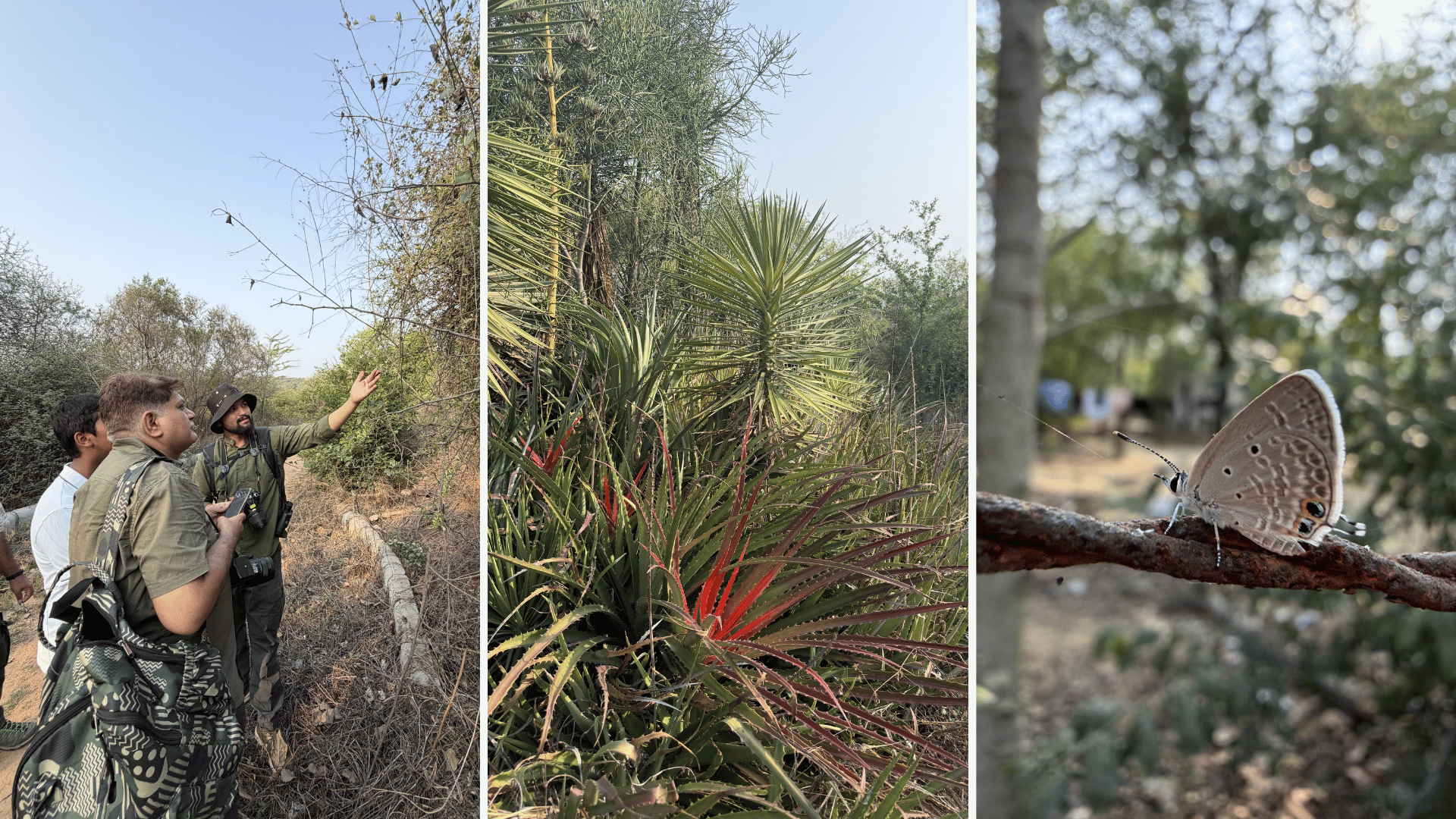
As the walk proceeded, the first sighting of the Indian Golden Oriole was seen, where the walk leader explained the behavioural pattern of the bird, and soon after, species like Long-tailed Shrike were also spotted. One of the best parts of the walk was that the Indian Golden Oriole was spotted around 6-7 times in the walk. The whole area was even richer in herpetofauna, as multiple butterflies, such as the Yellow orange tip and Common Gull and also got to learn about the various plants that were growing in the region. Rosary Pea and Bistendu were the prominent species the participants learned about during the walk. The walk ended with the clicking pictures from the viewpoint of the Asola Wildlife Sanctuary. An old fort was also visible from the viewpoint, about which, when the participants enquired, the leader shared that it is the ruins of some Mughal-era monument. Eventually, the green cover had taken over it, giving it its current look.
Overall, the walk was an enormous success, where the participants encountered the thrill of exploring a relatively new location. They requested more such walks to be conducted, where they get to know their city more from a different perspective. Awareness is the first step towards conservation, and that’s exactly what Earth Walks does every Sunday, but in a much more fun manner. Join Earth Walks and redefine what nature means to you entirely. Click here to participate in our next walk: click here https://asianadventures.info/p/af0725/
Bird List
1. Indian Golden Oriole
2. Indian White Eye
3. Brown-headed Barbet
4. Coppersmith Barbet
5. Yellow-footed green pigeon
6. Indian Silverbill
7. Black Drongo
8. Indian Peafowl
9. Indian Robin
10. Asian Green Bee Eater
11. Long-tailed Shrike
12. Red wattled Lapwing
13. Alexandrine Parakeet
14. Ring-necked Parakeet
15. Common Myna
16. Grey Francolin
17. Asian Koel
18. White-throated kingfisher
19. Oriental magpie Robin
20. Wire-tailed swallow
21. Common tailorbird
22. Rock pigeon
23. Red vented Bulbul
24. Red-whiskered Bulbul
25. White-eared Bulbul
26. Common tailorbird
27. Purple sunbird
28. Jungle babbler
29. Laughing dove
30. Collared dove
31. Ashy prinia
32. Grey-breasted prinia
33. Black kite
34. Rufous treepie
35. Eurasian collared dove
36. Greater coucal
37. Yellow wattled lapwing
38. Yellow-eyed babbler
39. Common babbler
40. Common hawk cuckoo
Butterfly Species:
1. Yellow Orange Tip (Ixias pyrene)
2. Common Gull (Cepora nerissa)
3. Small Cupid (Chilades parrhasius)
4. Striped Pierrot (Tarucus nara)
Trees:
1. Rosary Pea (Abrus precatorius)
2. Karonda (Carissa carandas)
3. Tendu (Diospyros melanoxylon)
4. Bistendu (Diospyros montana)
5. Amaltas (Cassia fistula)
6. Semal (Bombax ceiba)