
The Best Winter Birdwatching Experience at Dhanauri Wetlands, Delhi NCR
Date: 14th December 2025
Location: Dhanauri Wetlands
Trail Leader: Mr Deepak Kumar
Walk Coordinators: Kirtika, Amruth
Trail Theme: Birds of Dhanauri Wetland
Number of participants: 9
Name of Participants: Biswajit Mailk, Sudeshna Sinha Malik, Garima Gupta, Ruchi Agarwal, Sudhir Gupta, Tanmay Telang, Ravi Singh, Hariraj Singh, Geetanjali Agarwal
About Dhanauri Wetlands
The wetlands are mainly composed of seasonal marshes, shallow water bodies, reed beds, and surrounding agricultural fields. It is protected by local communities, which have the primary focus on the conservation of the birds that inhabit the region, especially the state bird of Uttar Pradesh: the Sarus Crane. The area of the wetland is spread over 100 hectares, and the rich habitat is the abode of various resident and migratory birds and the flora and fauna of the wetland. For this very reason, activities such as bird-watching, nature walks, photography, and conservation awareness-raising programs take place in the area.
The Earth Walk
The frosty morning of 14 December 2025 was a winter wonderland in itself. The high pollution rate in the NCR, coupled with the decreasing temperatures of winter, had brought about one of the first smoggy mornings of the season. Yet on this nearly zero visibility day, the teams of Asian Adventures and Global Wildlife Fair had successfully carried out the Dhanauri Bird Walk. The love of bird-watching has been so immense among the participants that they all reached the assigned location. Here, Deepak gave an introduction to the wetlands of Dhanauri. Sprawling over an area of 100 hectares, situated just beyond the Thasrana village, Dhanauri is a heaven for birding. It is basically government-protected land, and hence, no farming is allowed in the area. The walk began after a briefing provided by Kirtika.
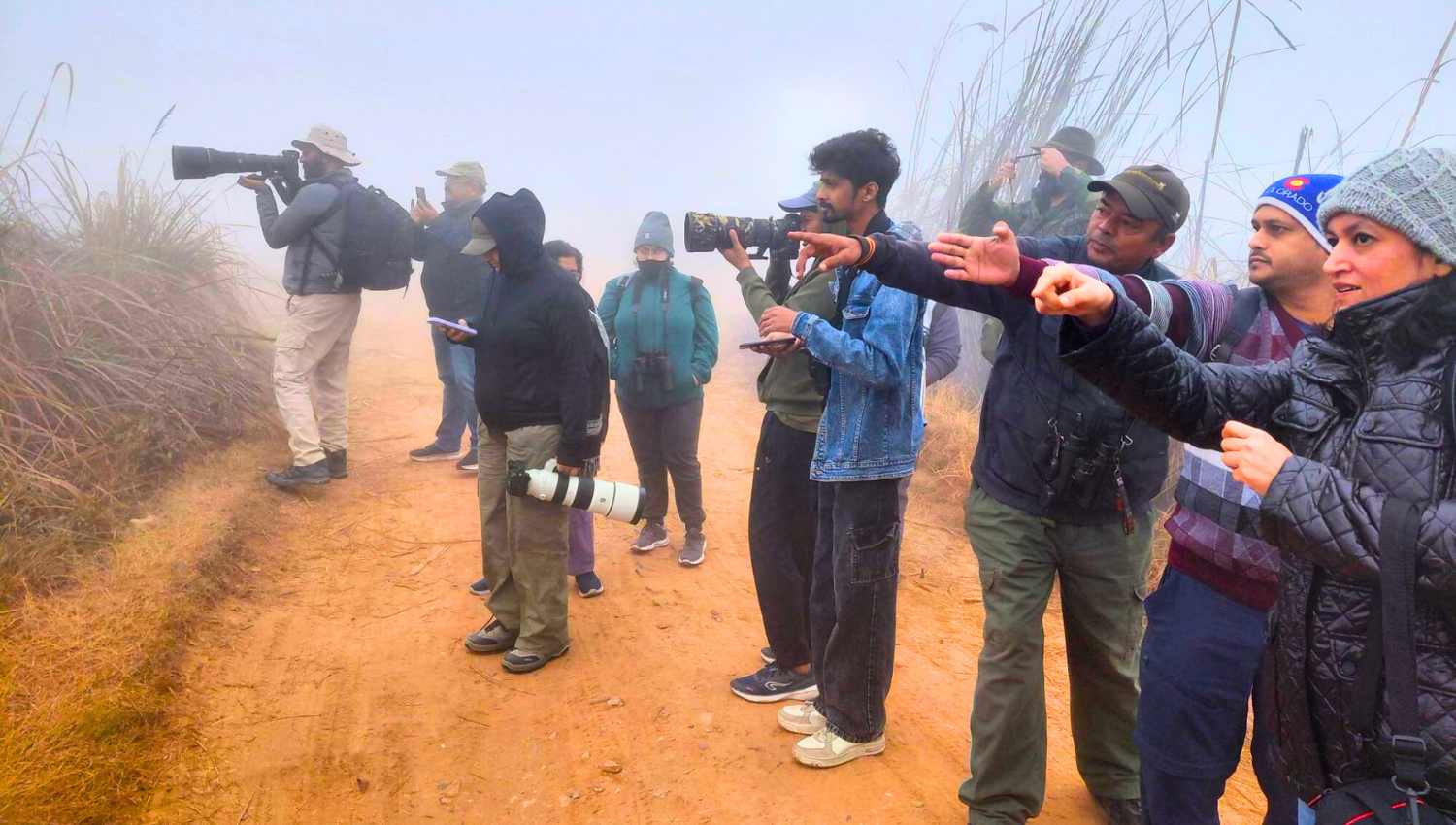
The walk leader explained that this area is well-known for birds such as the Sarus Crane, which is the highlight of the wetland, the Bristle Grass Bird, which is an endangered species, is also found here, and munias are also a common feature in the region. As the walk started, the sounds of geese surrounded the entire area, and amidst the heavy mist, the group spotted birds such as long-tailed shrike, large grey babbler and greater coucal. The mist was making photography and spotting very difficult, but it seemed like the birds were guiding the group through their voices, which made their spotting comparatively easier. When the area of the wetlands began, the Indian Pond Heron was spotted. He told a very fascinating tale about the bird that the locals of Bharatpur call the magic bird, because it appears brown when it sits and turns white when it flies because of its underlying feathers.
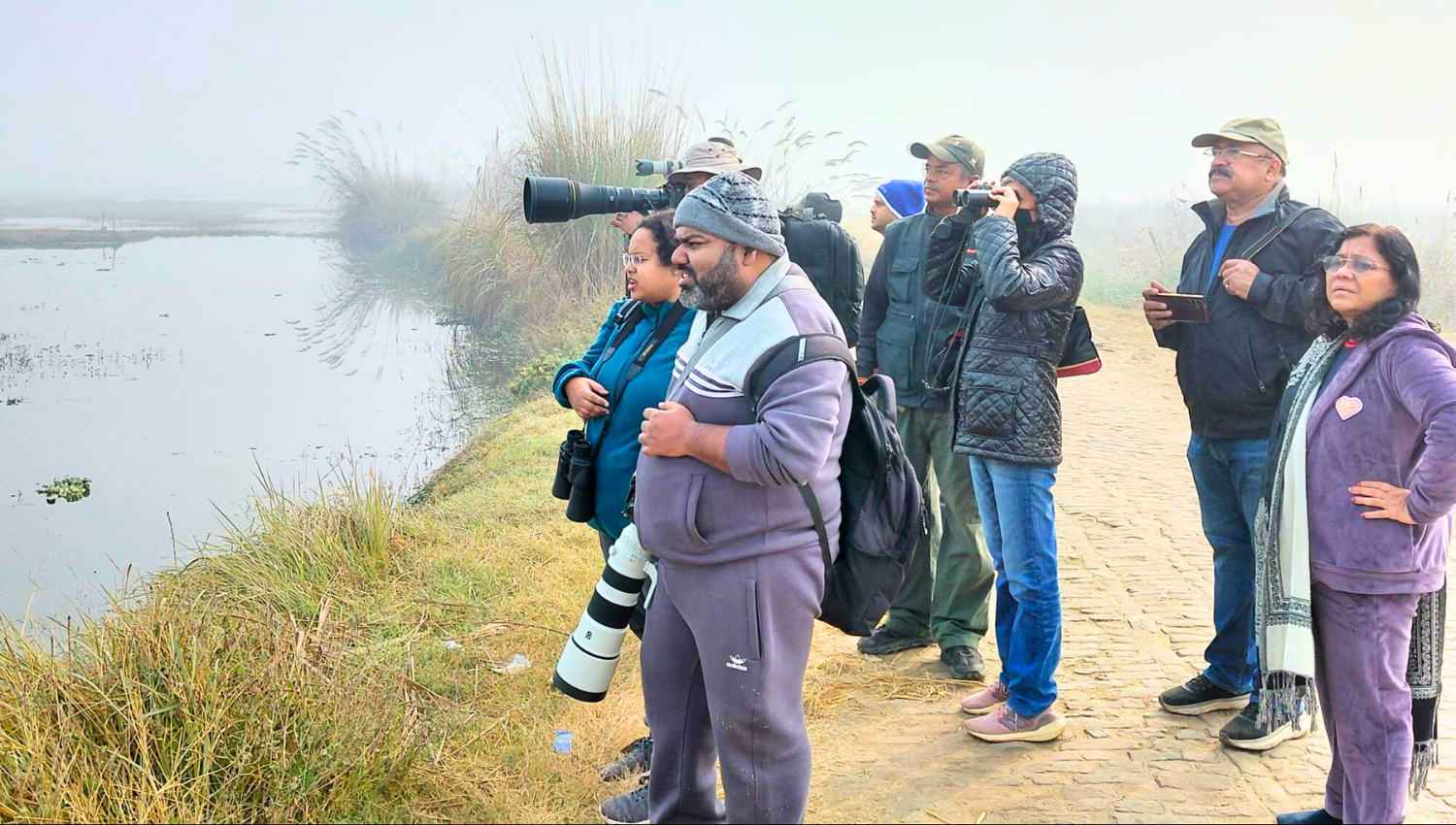
Further, the group was successful in spotting more birds such as Eurasian Coot, Great Egret and Cormorant. Here, the inquisitive participants asked him questions regarding photography. He then explained a very important rule of photography: that a picture is best captured only when the colours are witnessed through the eyes. If the human eye cannot understand the colours, then no amount of a good quality camera, lenses or editing can bring out the colours in a photograph. As the group proceeded forward, the sound of the Sarus Crane pierced through the mist, making everyone realise they were in proximity to it, even though the dense fog was not allowing them to view the bird. The crowd started asking questions regarding the Sarus Crane, including queries about its eating habits and the conservation efforts that have been made by the UP government for its conservation. He explained that the staple diet of the birds includes fish and insects, and since it is the state bird of UP, many efforts have been taken by the government to promote its photography and conservation.
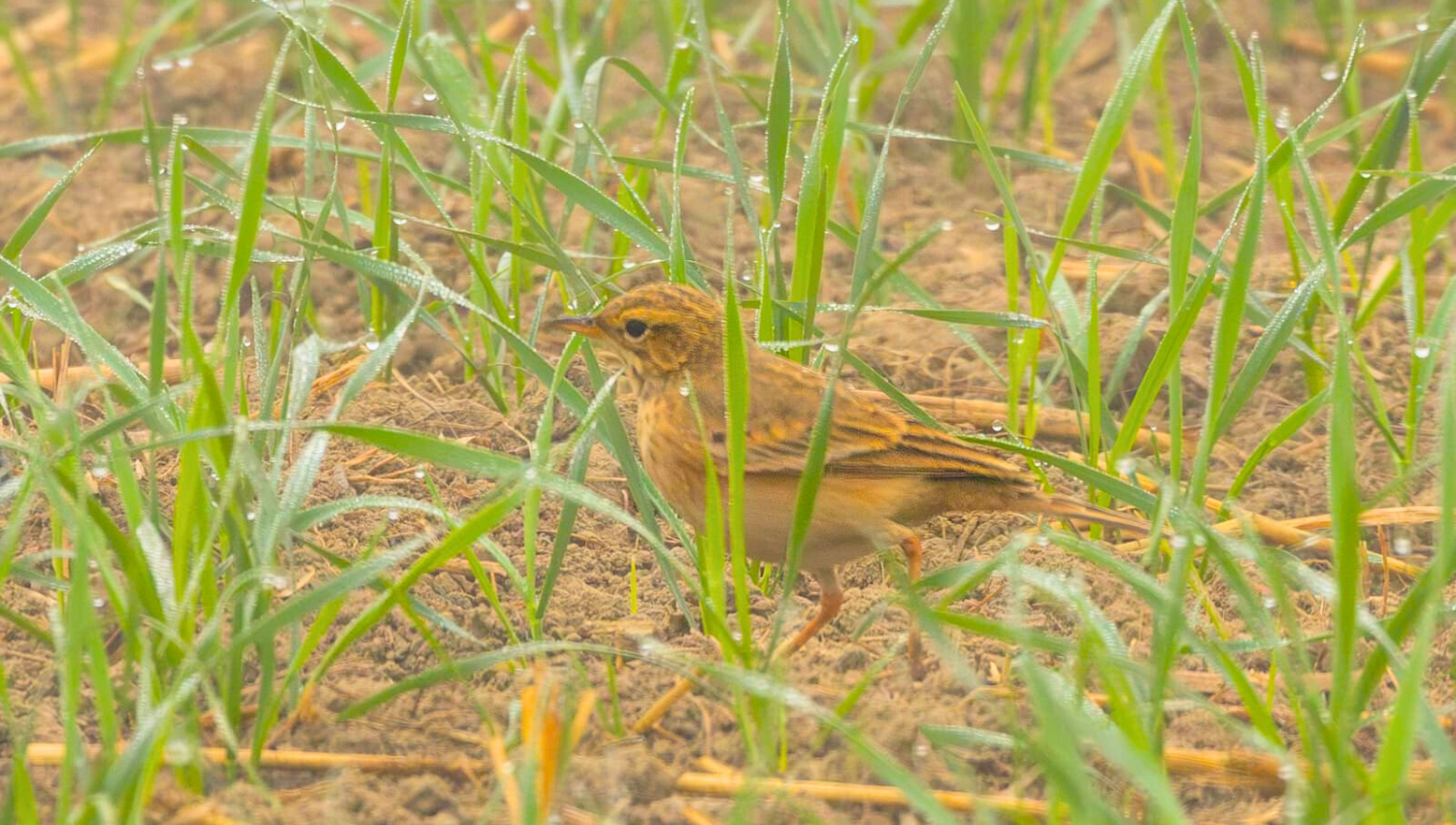
Then the group enquired if birds like flamingoes visit the area? He explained it does and told about various other spots throughout the country where flamingos can be best spotted. After a small discussion about the best time to visit wildlife sanctuaries in the country, a tawny Pipet that was hiding appeared on the top of the leaves and gave various photogenic shots that were captured by the photographers. He then explained the distance of the nearby villages from the wetlands and the importance of the birds in the ecosystem, as they eat the worms and thus improve crop growth. This establishes a relationship between the farmers and the birds. When he was explaining the vegetation in the area, Shikra, the bird of prey, and Rufous Treepie were then spotted. By this time, the sun had dissipated the smog, and more birds, such as swamphen and little egrets, became visible.
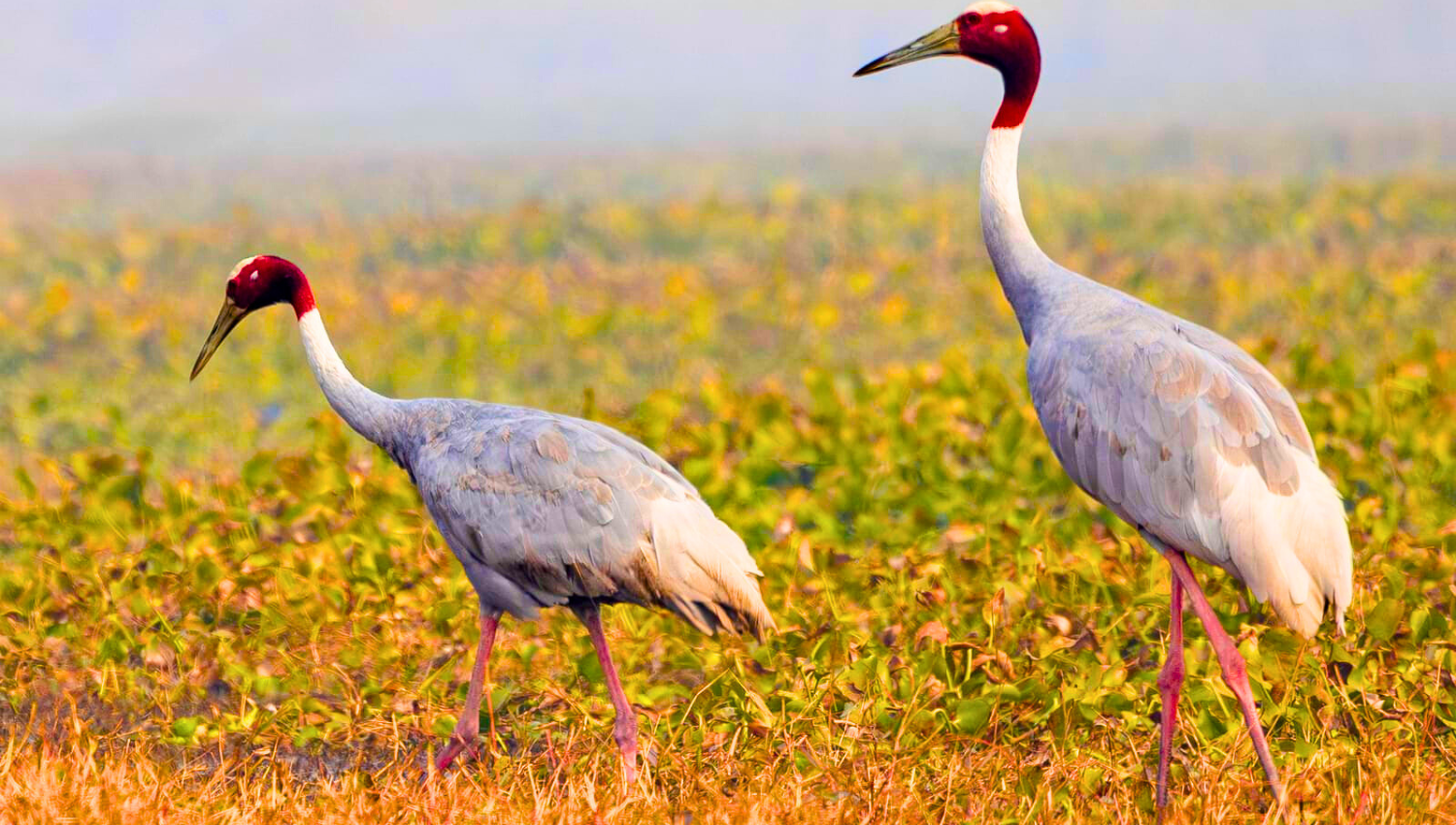
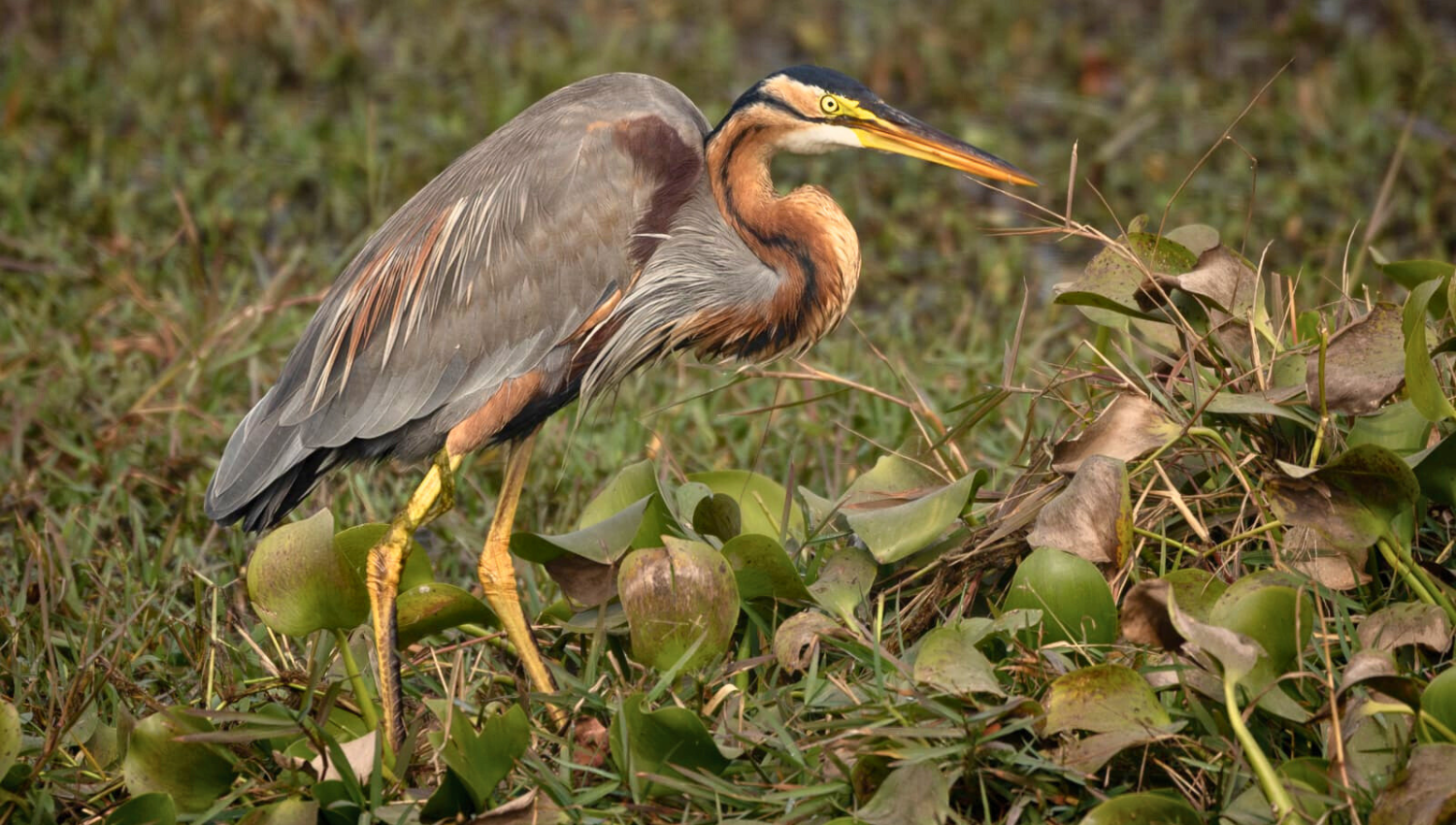
As a Purple Heron flew over the crowd, the special structures that were present in the fields were explained. These are the initiatives taken by the local people to make restricted areas where birds can lay eggs. Just then, the group noticed a wonderful sight where clusters of purple swamphen flew in a group because a Marsh Harrier had flown over them and had scared them. Four black-headed Ibis were spotted sitting together, while the penetrating rays of the sun introduced the Asian-wolly necked stork and stripped babbler to the group. Towards the end of the walk, Sarus cranes were finally spotted - the male and the female together. Excitement knew no bounds among the photographers as they jumped into the fields to capture their perfect shot of the couple. The Pied Bushchat and Pied Kingfisher were the last ones to be seen before the group dispersed.
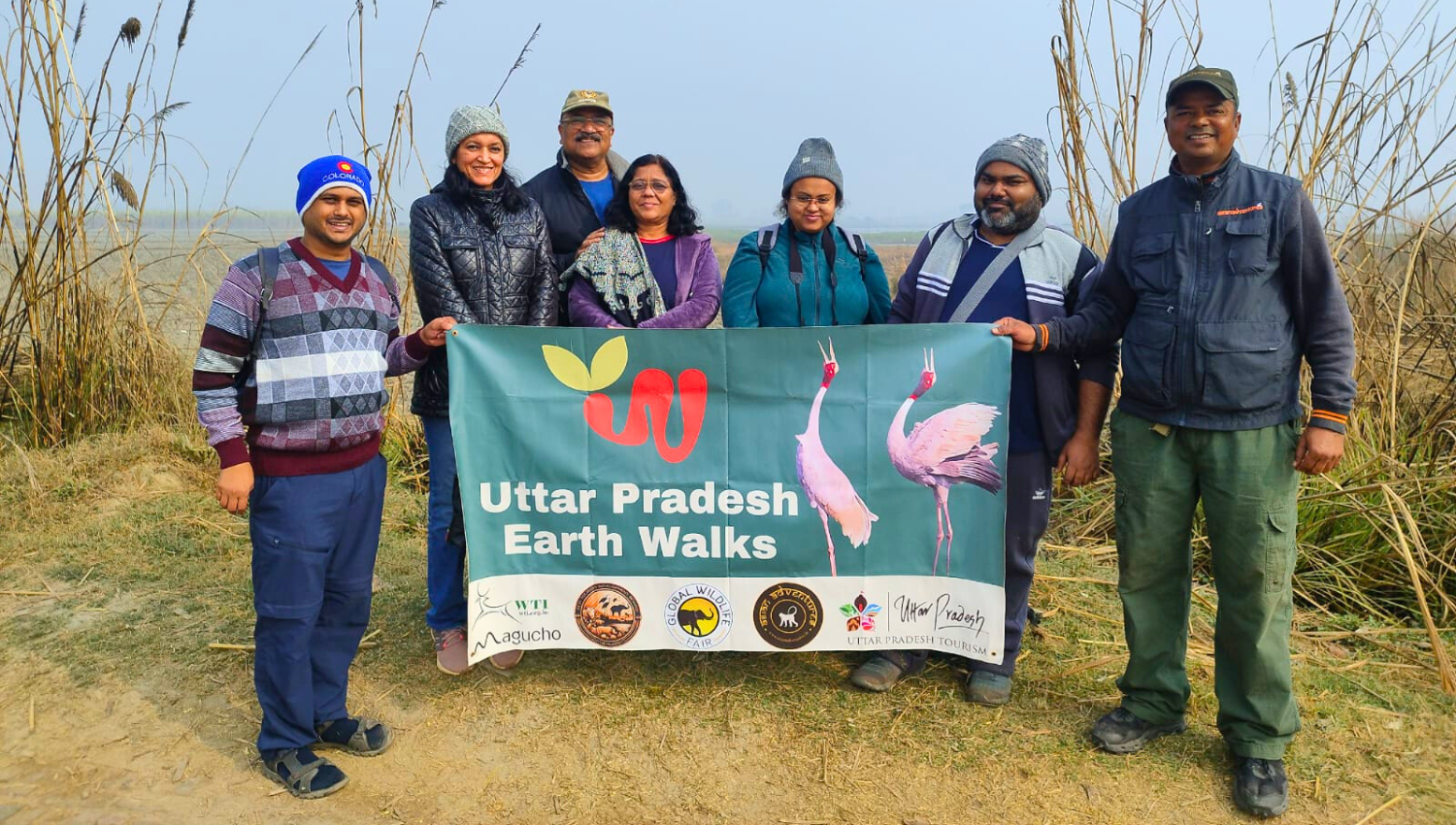
Overall, the walk was a tremendous success, with participants understanding how we can also be a valuable asset in the conservation of the avian culture around us. Dhanauri may look like a normal village to most of us, but upon a closer look, it reveals its avian treasure. Earth Walks is nothing but a closer look that is added to your everyday insights. To witness these marvels of nature, join us on our further walks. Click here https://asianadventures.info/p/af0725/ to make your Sunday a little more productive.
Bird list
- Indian Spot-billed Duck
- Green-winged Teal
- Indian Peafowl
- Gray Francolin
- Rock Pigeon (Feral Pigeon)
- Eurasian Collared-Dove
- Greater Coucal
- Eurasian Moorhen
- Eurasian Coot
- Gray-headed Swamphen
- White-breasted Waterhen
- Sarus Crane
- Red-wattled Lapwing
- Asian Wolly-necked stork
- Little Cormorant
- Black-headed Ibis
- Eurasian Spoonbill
- Little Egret
- Indian Pond - Heron
- Great Egret
- Gray Heron
- Purple Heron
- Western Marsh Harrier
- White-throated Kingfisher
- Long-tailed Shrike
- Rufous Treepie
- House Crow
- Ashy Prinia
- Plain Prinia
- Large Gray Babbler
- Jungle Babbler
- Striated Babbler
- Indian Pied Starling
- Siberian Stonechat
- Pied Bushchat
- Indian Silverbill
- Western Yellow Wagtail
- Tawny Pipit
- Pied Kingfisher