
22 Incredible Birds You’ll Spot on Pangot Earth Walks in Just 2 Hours near Nainital
Forests and feathers: Understanding the avifaunal culture of Uttarakhand - A report of the Pangot Earth Walk birdwatching trail.
Date: 12 April 2026
Location: Jungle Lore Birding Lodge, Pangot
Trail Leader: Kundan Kumar
Trail Coordinator: Jagjeevan S. Dhami
Trail theme: The forest breathes in wings and whispers
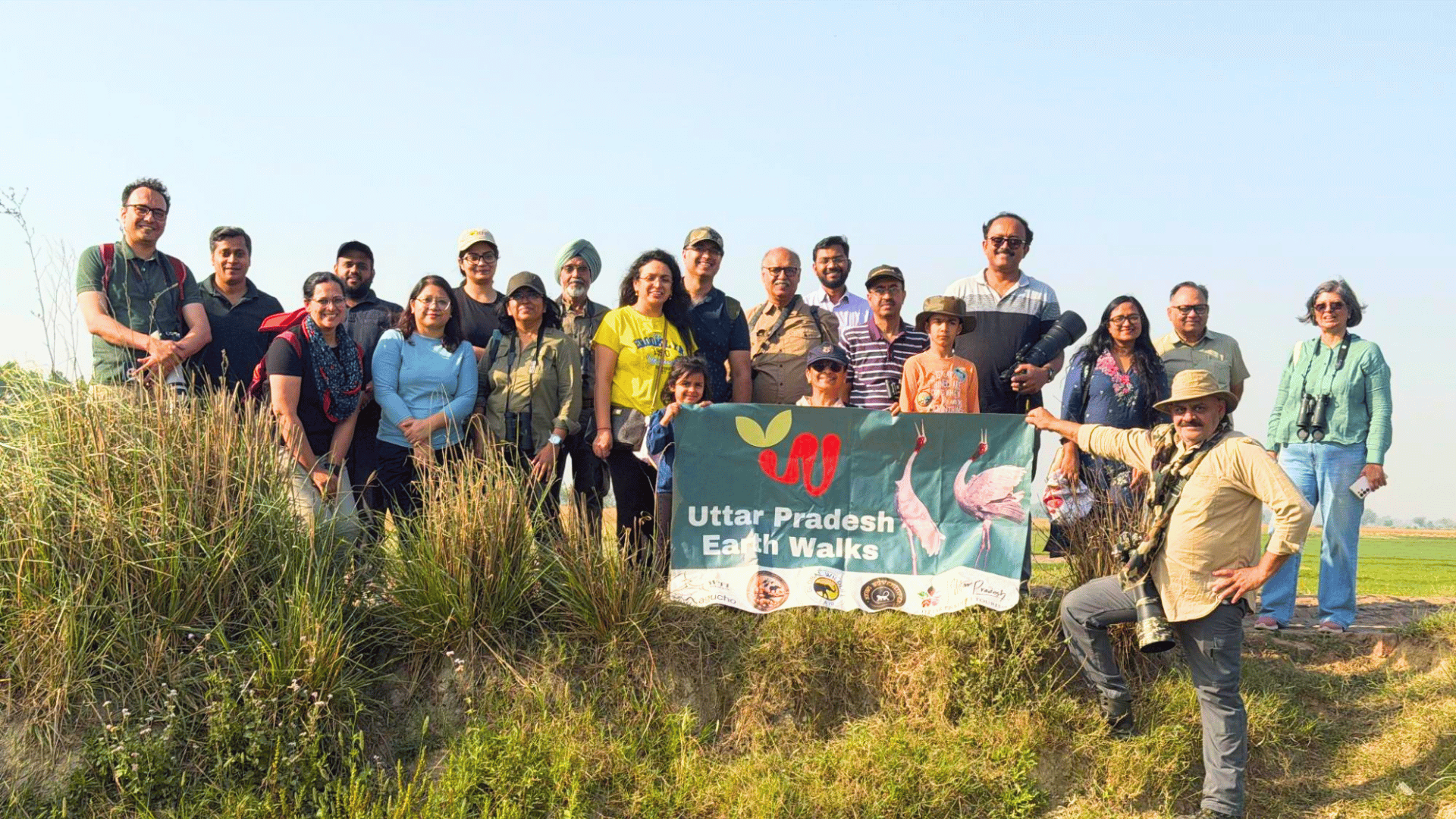
Pangot is a region in Uttarakhand where the richest biodiversity in terms of avifaunal species can be noticed. To highlight the various species that are found in this place. Asian Adventures, in collaboration with the Global Wildlife Fair, had organised an Earth Walk here. The participants met at the designated location of Jungle Lore Birding Lodge, where they discussed with the walk leader towards the beginning what one might expect during the walks. After answering all the due questions, they started the walk and, through the serpentine paths of the mountains, tried to explore the species that are exclusive to the region and the Himalayan ecosystem on the whole. The first species to be encountered was the gray-headed woodpecker, which was hidden amongst the thick canopy, and the participants searched for it while tracing its voice. Once it emerged from the leaves and became visible, the group left no stone unturned to click its pictures and trace it with the binoculars.
The selected destination of the walk was Woodpecker’s Point. Located at a distance of 1.5km from Jungle Lore Birding Lodge. An absolute heaven for spotting and photographing exclusive Himalayan species, the path to the woodpecker’s point is covered with dense forests of oaks and pines. The reason for this specific trail being chosen lies in the fact that it is perfect for both beginners and people who are into trekking. It was then that a Himalayan shrike-babbler and a long-tailed broadbill were spotted.
The walk became a hotspot for discussion of various themes, such as climate change, conservation practices, human-nature harmony in the region, and, most importantly, how these factors shaped the ecosystem of Pangot. This fascinating discussion was interrupted by the sound of the White-tailed Nuthatch, which was the next species to be spotted on the trail. As the walk progressed and the sun began to rise, opportunities for better photography also opened up. Where once appeared to be dark green corners of foliage, now, under the sunlight, they acted as the perfect backdrop for the images of the birds to be captured.

The time span of two hours flew by like nothing. From understanding the reason for the coniferous trees at the specific altitude to tracing the different minor river bodies that sustain the entire ecosystem, this trail to Woodpecker’s Point explained it in a better manner. The reaction of the participants became a highlight for Earth Walks as they were so excited to learn about the various elements of nature and their decisive role in the ecosystem. They were even inquiring about when more walks would be organised. Become a part of Pangot Earth Walks and discover the nature beyond what the eyes show you. Walk with the experts and gain a whole new perspective on the surrounding nature with Earth Walks. To join, click here https://asianadventures.info/p/af0725/
Bird List
- Kalij Pheasant
- Common wood-pigeon
- Oriental turtle-dove
- Spotted Dove
- Himalayan Cuckoo
- Great Barbet
- Brown-fronted woodpecker
- Gray-headed woodpecker
- Himalayan woodpecker
- Long-tailed Broadbill
- Black-winged cuckooshrike
- Himalayan shrike-babbler
- Maroon Oriole
- Red-billed blue-magpie
- Barn Swallow
- Eastern red-rumped swallow
- Striated Laughingthrush
- Bar-tailed treecreeper
- Rufous-bellied Niltava
- Ultramarine Flycatcher
- Verditer Flycatcher
- White-tailed Nuthatch