
Experience the Best Birding Adventure with Delhi Earth Walks at Amrut Biodiversity Park
Understanding the avifaunal culture of Delhi - An Earth Walks report of the birdwatching trail at Amrut Biodiversity Park
Date: 5 April 2026
Location: Amrut Biodiversity Park
Walk Leader: Dr Rajesh Kalra
Walk Coordinator: Salil Dutta
Walk theme: Summer trails and bird calls
No. of Participants: 45
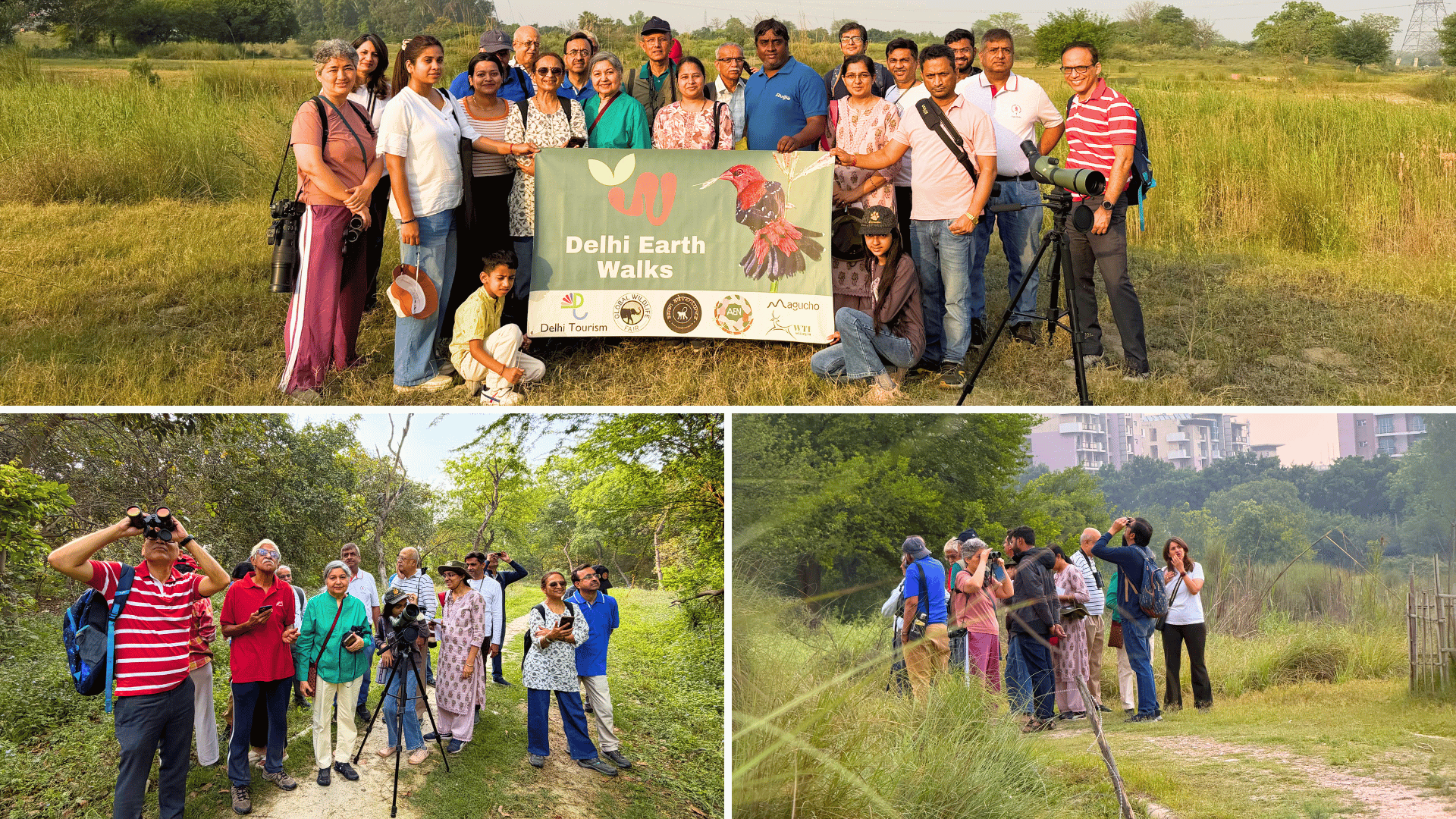
Amrut Biodiversity Park stands out as one of those iconic locations in the heart of Delhi, where conservation efforts, scenic landscapes and panoramic views of the birds, all can be enjoyed in one frame. To further understand the importance of Delhi as a vital location in the larger migration belt, Asian Adventures, along with the Global Wildlife Fair and Delhi Tourism, organised an Earth Walk in the Amrut Biodiversity Park. The walk started with all participants meeting at the designated location. Here, the walk leader began by discussing how such natural walks bring immense changes not only to the rhythm of everyday life but also largely contribute to the maintenance of official records of the avian species of the region. He himself is a core member of the Delhi Atlas team and one of the most loved walk leaders, thanks to his personality, which makes birdwatching trails truly immersive.
As the walk started, the group first encountered a white-throated kingfisher, perfectly balancing its body movements as if posing for pictures. The participants immediately took out their cameras and binoculars to capture and witness this spectacular moment. Earth Walks itself is such an engaging event that it doesn't feel like the ordinary birdwatching trails. A few people who had visited the park for their regular morning walks joined the walk, looking at the enthusiasm of the walk leader and the eager participants tracing birds. People came for the birds but also enjoyed the activity of recognising the various fruits that were growing in the park.
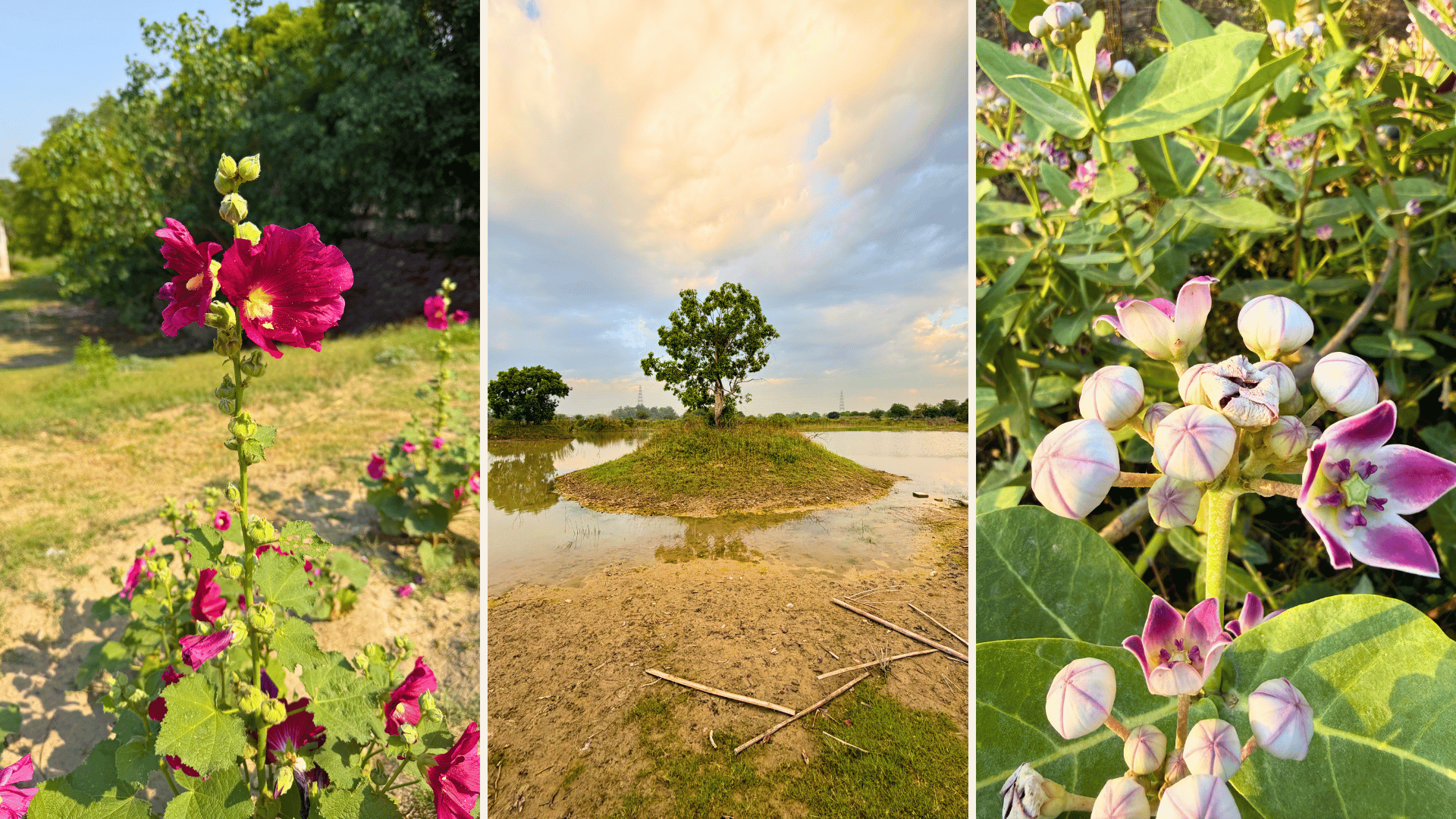
The participants and children who were part of the walk managed to find edible berries such as mulberries and Indian Jujubes, with the walk leader joking that no ambulance would be provided in case anyone tasted a poisonous fruit. Relishing the taste of this natural product, they didn’t mind getting their hands and faces stained while having the fruits. It was then that the highlight moment of the walk was seen. More than 2000 Rose-coloured Starlings were seen in a murmuration. This phenomenon is basically these birds forming various formations in the air, the sync with which these movements were carried out made it feel like nature’s own group dance performance. The participants left no stone unturned in capturing this iconic scene.
The walk leader went on to explain further that it is done by the birds to confuse the predators. It is because of these formations that the predators ( hawks, falcons, etc.) are unable to target a single bird; standing together saves them from being hunted. Another beautiful message can be seen from this incident, as the collective efforts of the birds in these formations save them from being hunted. Similarly, if people take collective actions, then conservation wouldn't appear to be as big a task as it seems. The Amrut Biodiversity Park stands as a living example of it. Keeping up with the dynamics of promoting citizen science, Earth Walks accomplished another milestone in this walk. For the first time, species like the Common Rosefinch, Scaly-breasted Munia, and Red Avadavat were spotted and recorded on eBird, hence adding crucial data to the official records of the city.

Overall, the walk was a huge success. It was a moment of immense pleasure for the whole Earth Walks team that one of the college friends of the walk leader, Dr Nilima, had joined us too for the walk. The whole walk turned out to be an amazing experience for the participants who registered themselves almost immediately for our upcoming walks. You can even add something exciting and informative to your Sunday and make memories with people who share that passion for nature with you. Become a part of Earth Walks and get to learn something new on every walk about your city. It is nature-made and engaging. To become a part, click here https://asianadventures.info/p/af0725/
Bird List
- Indian Spot-billed duck
- Indian Peafowl
- Rock Pigeon
- Greater Coucal
- Asian Koel
- Common Hawk-cuckoo
- Red-wattled Lapwing
- Coomon Greenshank
- Painted Stork
- Oriental Darter
- Rock-naped Ibis
- Little Egret
- Purple Heron
- Shikra
- Black Kite
- Asian Green Bee-eater
- Common Kingfisher
- White-throated kingfisher
- Pied Kingfisher
- Brown-headed Barbet
- Alexandrine Parakeet
- Rose-ringed Parakeet
- Black Drongo
- Rufous Treepie
- House Crow
- Large-billed Crow
- Common Tailorbird
- Yellow-bellied Prinia
- Ashy Prinia
- Plain Prinia
- Zitting Cisticola
- Paddyfield warbler
- Red-whiskered Bulbul
- Red-vented Bulbul
- Indian white-eye
- Jungle Babbler
- Rosy Starling
- Indian Pied Starling
- Common Myna
- Purple Sunbird
- Red Avadavat
- House Sparrow
- Paddyfield Pipit
- Common Rose finch
- Red-headed Bunting
- White-capped Bunting
- Asian Openbill
- Blue-tailed Bee-eater
- Baya Weaver
- Yellow-footed Green-Pigeon
- Eurasian Coot
- Asian Wolly-necked Stork
- Little Cormorant
- Asian Spoonbill
- Great Egret
- Coppersmith Barbet
- Gray-throated Martin
- Greenish Warbler
- Black Redstart
- Western Yellow Wagtail
- Eurasian Collared-Dove
- Laughing Dove
- Black-winged Stilt
- Glossy Ibis
- Black-headed Ibis
- Indian Pond-Heron
- Barn Swallow
- Brown Roch Chat
- Scaly-breasted Munia